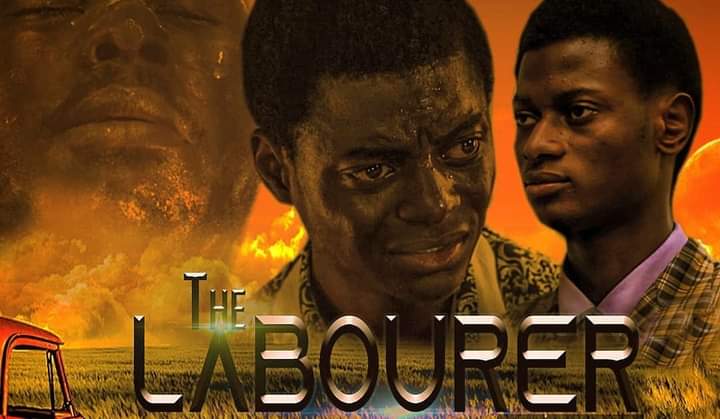
Hey folks! You’re welcome to the review of the short film The Labourer. It’s a Father’s Courier Productions release that recognises itself as a short and doesn’t beat about the bush. Instead, it expresses its message in clear and succint illustrations. It stars Temidayo Ayodele, Festus Olalekan Dairo, Faith Dairo, Flora O’seyi Ayodele and Francis Dairo. It tells the story of a young drama minister who wants to be successful but lets his focus on the expectation of financial rewards cause him to take his eyes off God and the mission.
The film has a plausible storyline because almost everyone can relate to that point in time where you feel you need a break. But then, that break becomes a very long one that culminates into abandoning one’s original purpose. It brings to the fore the question of what God’s blessing on our work for Him is – is it in monetary terms, or is it about the souls that are saved? Ultimately, The Labourer makes us see that God’s servants must keep their eyes stayed on Him and wait patiently for any kind of reward. I like that it also addresses institutions that invite drama ministers for ministrations and don’t give them anything, which more often than not, is done from a selfish motive.
As in Jinxed (2020) reviewed sometime ago, the sound design here is good too, especially the prominence given to the ambient sounds of scenes. It also puts up Bible references for points of the message it passes across. In The Labourer, we see the agony of an abandoned vessel in whose situation a great level of brotherly affection is portrayed through the use of flashbacks from vantage points, a technique which usually makes for an interesting watch.
The movie remarkably emphasizes that we are workers in God’s vineyard and at no time does God expect us to do it in our natural, human strength. We are co-labourers with Christ, we are God’s vineyard, we are His building. Thus, as well as using us to bring in a harvest, He is also working in us, helping us do it, hence, the Yoruba terming of God as the Oromonisefayatii (The One who sends one on errands and still goes with him).
THE LABOURER: WE WORK FOR HIM BUT HE ALSO WORKS IN US BOTH TO WILL AND TO DO OF HIS GOOD PLEASURE.
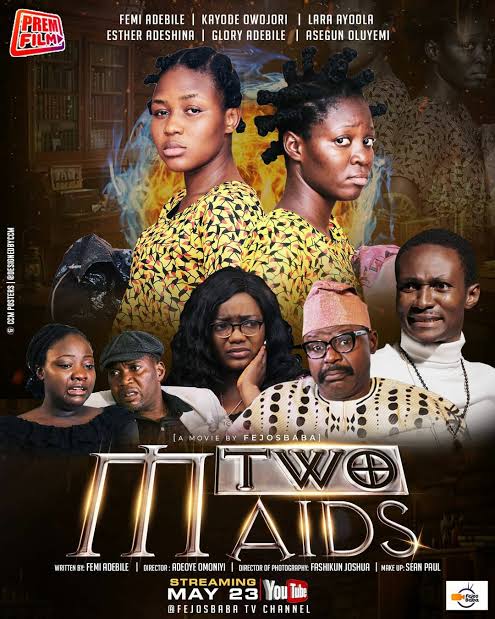
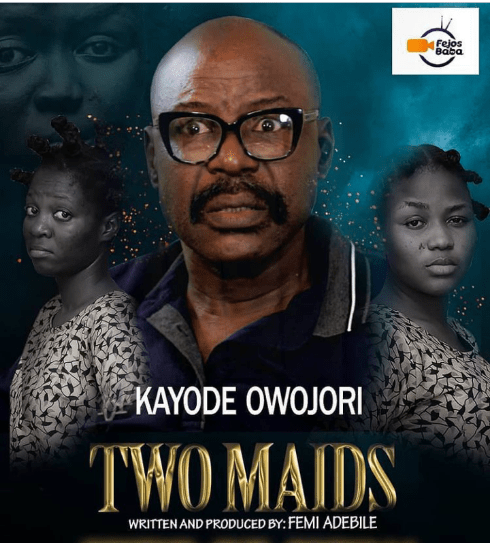
Hey folks! You’re welcome to the review of Two Maids written by Femi Adebile, produced by Fejosbaba TV and directed by Adeoye Omoniyi. It was released from the stables of PREM Film Production International. The movie creates a very interesting premise when Mr and Mrs Kunle, played by Kayode Owojori (Abattoir Series [2020 to date], Games Season 1 [2021] ) and Omolara Ayoola (The House of a Stranger Series [2020-2021], Jailer [2021] ) each get a maid for their home. It tells the story of two maids with conflicting missions in the Kunle household.
Charity and Princess
Esther Adesina and Glory Adebile are right at home in their performance as the two maids – Charity and Princess. The movie is quite engaging because right from Charity’s introduction, the element of mystery begins and the questions raised don’t get resolved for a long time. This film then makes use of the dream motif, and its peculiarity is taken into consideration. For example, events in dreams do not necessarily happen sequentially, and the concept of time and space is not always what works in reality. Hence, sequentiality and spatial and temporal settings are displaced in Two Maids, which works as elements of a dream. One aspect to pay attention to though, is finding a way to indicate distinctly, at what point exactly the dream began, because, by the time we’re back in reality, questions would be raised in our minds as to which events were real and which weren’t.
Femi Adebile as DJ
Another remarkable dream element Two Maids uses is the allegory, which goes to portray the powerful message of the Second Coming of the Lord Jesus Christ, and people’s attitude towards the uncertainty of its time. The film is thus a timely reminder of what I regard as the Greatest Event of All Time – the Wedding Feast of the Lamb. At the level of symbolism, the movie works very well as it portrays the battle between the forces of light and darkness. The musical element, as well as its accompanyinig animation (a pictorial representation of Jesus’ return), put at the closing stages was also quite good to see. I’ve observed that in recent times, the writer has ventured into genres Christian films don’t abound in presently; that’s a very good development.
Kayode Owojori as Mr Kunle
However, the opening credits are rather too long, being about six minutes. The subplot of DJ and his friends, I felt, was rather too distant to the main plot. Also, there were a few snappy cuts away from scenes, and this was none more demonstrated than the scene where Mr Kunle slaps his wife: there was a shocking, an intense shot that displayed the gravity of the situation. It was an opportunity to feel the tension of the characters and hone in on the strain on their relationship at that moment, but just before we could experience it, snap! Into an unnnecessary establishment shot for the next scene. I believe these will be improved upon subsequently.
Lara Ayoola as Mrs Kunle
A sincere, down-to-earth epilogue draws the curtain on Two Maids; it was an agonising, a heartfelt, and I suspect, possibly unscripted rendition that tells us of the Lord’s imminent coming. With all the happenings around the world, this is a message for the unrighteous to put their trust in the Saviour that Jesus is, and for those who believe in Him to run their races with eyes on the Master.
Alright, we’ve come to the end of this review. Have you seen it? What did you think about it? Please, let me know your thoughts in the comments section below.
Hey folks! You’re welcome to the review of the short film The Voice. The story conceived by Timileyin Adereti (who also plays the protagonist) was written by Joseph Omoniyi and directed by John Oguntuase. It tells the story of Michelle, a lady who shuns the advances of a godly man for an image she has created in her mind of a perfect husband, a definition of which is anchored on physical attributes and wealth.
Timileyin Adereti plays Michelle in a larger-than-life way that accentuates the corrosion of her mind. She exemplifies what I would call the ‘carnality of spirituality’: though she’s a professing Christian, her world-view, perceptions and decisions are based on worldly things; she’s all into doing whatever she wants to do rather than seeking to do the will of her Lord.
The script is well-written in terms of the dialogue for each character. For example, Michelle’s description of a model husband makes relevant pop culture references. The lines for Marquin also possess a credible wit to sweep Michelle off her feet. Seun Adejumobi perfectly portrays an obnoxious Marquin character that is exactly what the director wants him to be – a slave-driver whose oppression is the stuff nightmares are made of. The consequences of such are best left for the imagination, which thankfully, is the case for Michelle.
The Voice makes us see that if we’re truly God’s sheep, then we would listen to the sound of His love over us, rather than the selfish human nature or wrong mindsets. May we continually enjoy God’s mercy over our life decisions, in Jesus’ name.
Hey folks! You’re welcome to the review of “Kembe Isonu Season 3: The Warfare”. Something I’ve come to appreciate in this particular series is how it gets better with each new season. That said, I would say that Season 3 is the cream of the crop in the series so far.
Its dialogue is significantly an upgrade on the previous seasons. Here, it was more engaging, more witty and remarkably makes use of Nigerian pop culture references such as sorosoke and lori iro. The pace picks up quicker and the background music has only gotten better and better. The introductory song was tailored to the cast name display in the opening credits, while a slower variation of its instrumental is used along the line in the movie, thus creating a motif for its music.
The development of the characters has also been consistent, while also smoothly introducing new characters. The boys have come a long way from the days of their captivity in Ewekoro’s dungeon. Gbadebo has evolved from his disinterest in the salvation of his soul into a bold, assured fellow who literally puts on a helmet of salvation, while Gbenro has become a teacher of the gospel. Some however, are yet to really turn a corner in their lives. I really look forward to Aremo ‘Bawumi stepping up to his potential. This is someone that at an early point in the series, seemed to be the hope of Bayegun village but fell short. Every other chance since then to take his place of authority in Christ just hasn’t been fruitful; so, I hope he eventually rises to the call.
A new Oluawo
Now to the eponymous character, Kembe Isonu: he’s at a place where he should be teaching others but he hasn’t made Jesus his only Lord yet. Even the newly born-again king of Alajogun recognises Kembe’s serve-two-masters mentality. And with God, you’d have to stay on one side of the road; you’re either hot or cold.
It’s sad to see Kembe Isonu reduced to a beggarly, pitiable and dishonourable state. Oluawo of Alajogun village serves as a foil to Kembe. Having been priests to the gods of their respective villages, their decisions to follow Jesus couldn’t have turned out to be more different than portrayed in this season. Oluawo has unswerving devotion to the Lord and he literally puts off the old man, and his new appearance is pleasant to see. Kembe on the other hand doesn’t put on the form of godliness, yet, wants the power therein. Gbawomi is the character that exposes his flaws, and like I said in my review of Season 2, he is one to look out for.
Gbenro
Gbawomi is on a revenge mission against Kembe Isonu because Kembe made Gbawomi’s relative, Alapini partially dumb. He is played excellently by Paul Adepoju who embodies his character in recognisable ways, especially in his mannerisms in speech, and charisma in gestures.
Let’s now talk about Olori Semoleyin who had promised to return in this season with power that would defeat the Almighty, and her plan was, well, to place curses on the people. Is it just me, or have you ever wondered how the King of Alajogun and Queen Semoleyin became a couple? I can’t just imagine what kind of marriage they have. That cursing scene is my favourite scene in the movie, inspired by the Balaam-Balak story, which is just an example of maybe I should say, more creative story writing.
Olufina
Also, one remarkable thing Season 3 does, I would say that other previous seasons don’t do that strikingly, is setting up the next season of the franchise. The story is well-poised to launch into another season due to the cliffhangers intentonally inserted in it. Gbewukari, Semoleyin’s mother, has promised to find out the ‘taboo’ of the New Covenant Gbadebo and Gbenro have with Christ, and it’s left to our imagination how the boys may be undone; something in the line of Delilah comes to my mind. That prospect makes me look forward to the next season. Similarly, the king of Bayegun who seemed to have given his life to Christ appears to shift ground when his most valued treasure is in chains. That showed me that whoever we claim to be and our profession of faith will be tested at one time or the other; I pray that after all is said and done, we will not be found wanting.
Coupled with questions of what Bawumi would do being pushed to the wall, a new season earns its place in this series. I look forward to a very impactful and entertaining Season 4.
Alright, we’ve come to the end of this reveiw. Have you see the movie? What did you think about it? What was your favourite scene? Please let me know your thoughts in the comments section below.
What’s up folks? You’re welcome to the review of Jinxed, a short movie produced last year that, along with After One (2021), inspired me to begin reviewing short films on a consistent basis.
TAGLINE: BEAUTIFUL STORY, POWERFUL MESSAGE OF THE GOSPEL
Jinxed was written and directed by Festus Olalekan Dairo. An amazing fact about it is that it was a project done last year by a group of students at the Mount Zion Institute of Christian Drama. It tells the story of Payin, who wants to be successful in life but seems to have been condemned to a meaningless existence by the very one that brought him into this world. He has lived a jinxed life and has accepted his luck, until God sends the most unlikely channels to turn the course of his life around.
The title could easily have been a term not uncommon to Christianity like ‘Cursed’ but it uses a word that anybody could relate with, thereby reaching more individuals, especially those who have accepted their fate in life. Jinxed shows us a better way by inspiring us to have faith and pray earnestly.
It isn’t popular to see a movie that makes all the right decisions in its aesthetic and technical components, but that is what obtains in Jinxed. This short has many distinct properties, among which is its fantastic sound design, an aspect that not many Christian films have been able to explore successfully. One of its benefits is the relatedness and smooth transitions it creates between scenes. It makes use of theatrical elements at its disposal that make watching it a rich experience. An example is its use of both English and French subtitles, which expands its potential viewership.
Another thing Jinxed does is to let the cinematography do a bit of the story-telling, rather than leaning heavily on dialogue. The gaps it leaves in dialogue and shots are things that can be easily inferred by the audience such that no sooner do you wonder what a certain gap means than you figure out the answer. Jinxed is an engaging and impactful movie.
Two vital elements of any movie are the protagonist and the story; Jinxed gets it right in both. Payin, wonderfully played by Adegoke Jolaadura Ezekiel, is someone we’d care about. His character is well-built despite the fact that there wasn’t a lot of time to do that. Jinxed re-tells a very short biblical and historical narrative in a very refreshing way. When all the pieces come together and you discover what story it is, the message hits you with clarity. Jinxed is indeed a gospel movie and is very impactful.
Without spoiling the movie for you, it ends on a very sweet note portrayed in a memorable and amusing way. I’d state here that Jinxed is up there with my favourite short films, and I’ll label it “A fresh and creative take on an Old Testament story of a turnaround”.
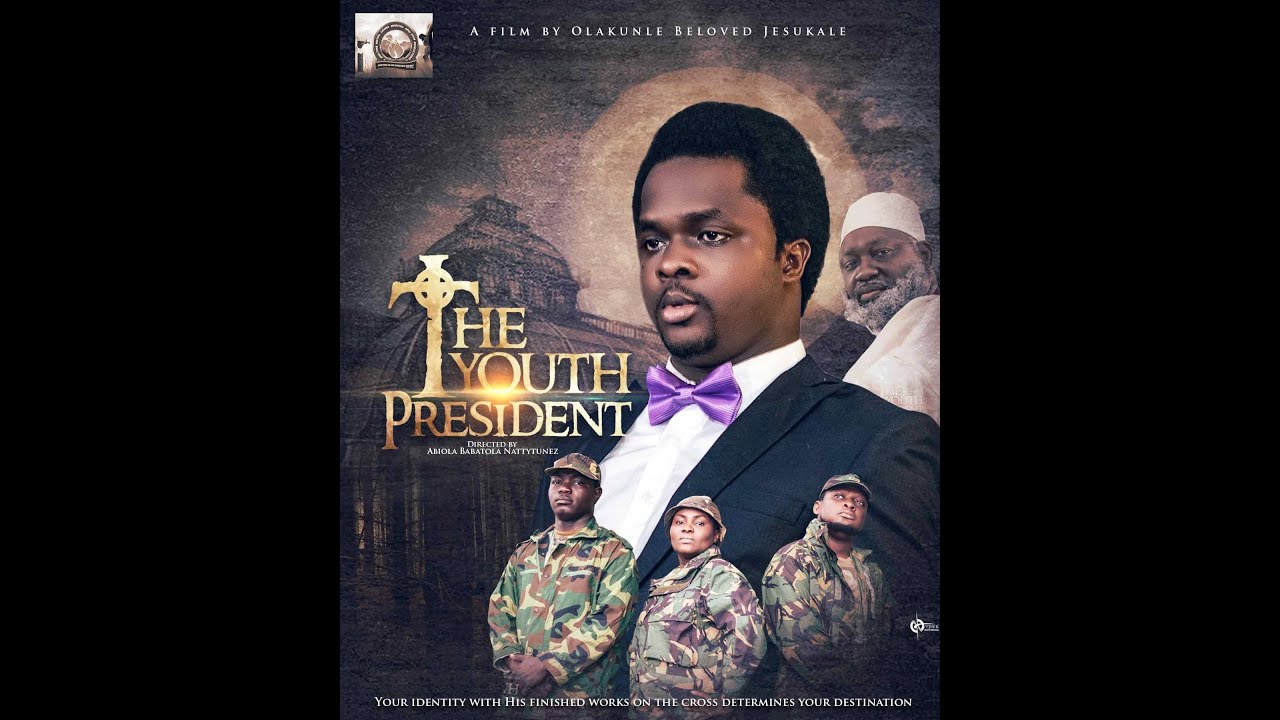
Hey folks! You’re welcome to the review of The Youth President, from the stables of End-time Revival Drama Ministries and Film Production (ETREM). It was directed by Abiola Babatola ‘Nattytunez’.
The poster picture was good, with the design of the title giving the impression that the setting would be Anglican. The opening montage looked promising with the faces of characters withheld initially. I expected that the protagonist would then be given a dramatic or cinematic reveal, which would have created a good feel to the movie; however, the attack on the youth president in the opening scene forced the camera to fully reveal him in a way that made the earlier build up of little effect.
The Youth President basically talks about the trials of faith that confront a productive believer, while attempting to show us the reason for them, and tags it ‘The Mystery of the Cross’.
A picture, they say, is worth a thousand words. If there are twenty-four pictures in a second of video, that means a one-minute video could communicate what twenty-four thousand words would. The mystery that this film is premised on could have been made clearer if there had been more action and fewer words. Thus, The Youth President largely places exposition over drama. Though majority of the film uses flashback stories to illustrate its message, it still goes ahead to verbally explain those illustrations. A better method to adopt would be the ‘Show, Don’t Tell’ technique that engages the audience, rather than the film spelling everything out to them.
A commendable aspect of this production is the effective make-up and costuming done for the demons. Similarly, the visual effect used for the ‘bubble of grace’ was credible and had no glitches. Areas of improvement include the subtitling, as well as the predictable camera work for scene transitions, especially the pans used to indicate the oscillations between the past and the present. With regards to the soundtrack, it’s always better when the lyrics are correctly articulated and sung with some finesse.
The message of The Youth President is a deep one – that the work of salvation was finished on the cross and that we are the ones that now have to lay claim to it. I would hope that subsequently, a film would show us, in practical terms, what it means to walk in Christ’s finished works and how to do so. If there would be a sequel, addressing this would do the movie a world of good.
Alright, we’ve come to the end of this review. Have you seen TheYouth President? What did you think about it? Please let me know your thoughts in the comments section below.
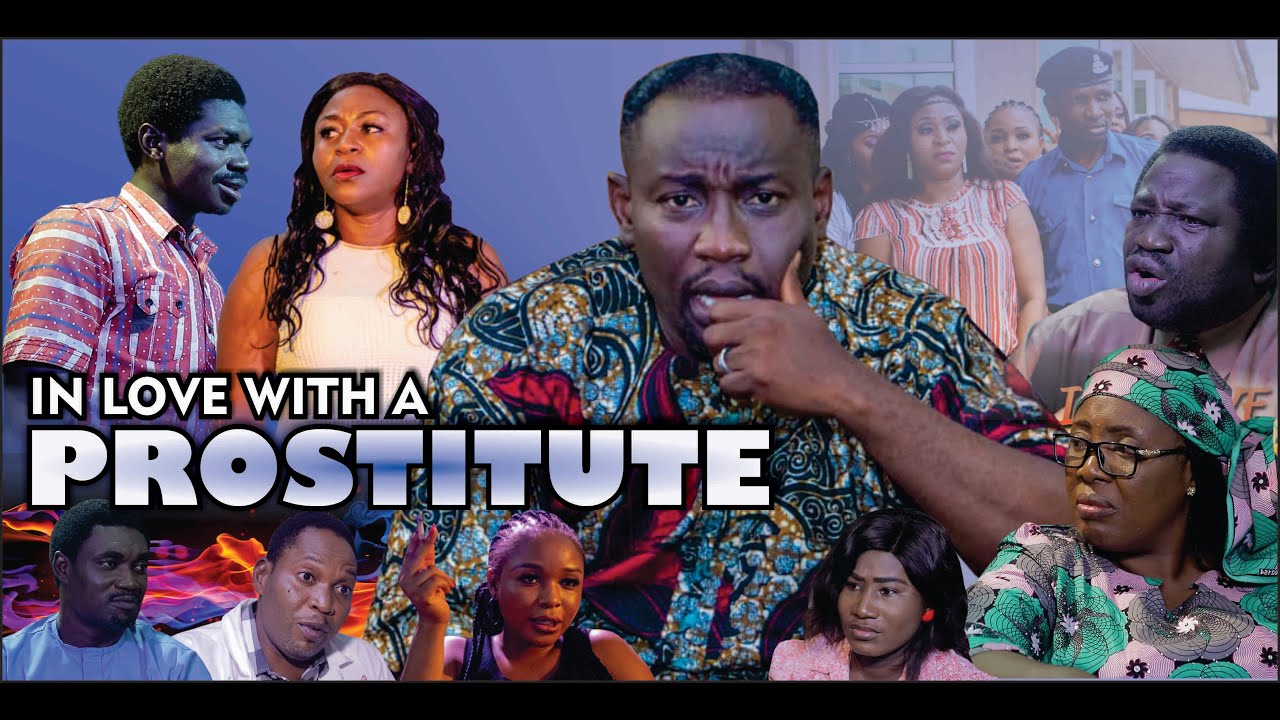
Hey folks! You’re welcome to the review of my third Valentine’s Day YouTube Christian movie release, In Love with a Prostitute. Interesting title, isn’t it? Interesting story too, especially because of the personality of the protagonist, Jide Williams, played by Ayo ‘Cineman’ Olaleye. The movie was written by Emmanuel Olorunjubeelo, directed by Adeoye Omoniyi and produced by Taiwo Ayoola.
As the self-explanatory title denotes, Jide falls in love with a prostitute and it is a pleasing thing when we see how that love, so to say purifies Sharon, played by Abiola Ojelabi. However, the whole process involved should not be overlooked, in order to avoid misunderstanding the message of the movie. I would say that this film uses Jide’s life to show the kind of mistakes one could make in marital choice, rather than using Jide’s actions as a model for Christians to follow.
On the surface, the situation looks like the prostitute was God’s will for Jide, which could really be misleading and easily misunderstood, especially with the biblical instance of Hosea and Gomer. So, maybe the million-dollar question is: Would God lead his child to a prostitute? Let’s examine it.
Proverbs 31:12 enlightens us that a virtuous woman does her husband good and not evil, but at the beginning of this movie, what we see is that Sharon “makes” Jide tell a lie to cover up something he didn’t even have an idea of. For majority of In Love with a Prostitute, Jide shows himself as a novice in many ways. His actions thereafter are as erratic as the occasional choppy movements from scene to scene, which made certain scenes feel incomplete and inconclusive. Jide actually shows Sharon care and compassion but his motives are questionable.
Next thing we know, he’s declared to his parents that he’s in love with her. Now, let’s look at this: he feels there’s something wrong with it – he tags it a strange love, he calls it madness, and asks God for healing; yet, he goes ahead to propose marriage to her and it was only then he thought to tell his pastor! That’s preposterous. Unfortunately, it’s like the pastor doesn’t even do anything about it.
From these, we can deduce that Jide has been entirely emotional about his marital choice; he hasn’t deferred to God, spiritual authority or parental guidance concerning it. He clearly doesn’t have peace in the union; so, it’s a wonder why he goes ahead. I deem it vital to state that the movie is not trying to say that Jide has done the right thing. In any case, God does later on redeem the situation and makes something beautiful of Sharon’s life.
A better way for Jide to have gone about it would be to seek God and not be carnally minded. He might have “fallen in love” with Sharon but as a child of God, he should have sought to first of all, reconcile her with God by showing her the love of Christ. In the movie, his care for her eventually touches her and she begins to turn over a new leaf; for her, whether he married her or not, she wouldn’t return to prostitution – that should have brought Jide back to his senses. Her decision offered him the opportunity to come into the actual part God might have intended him to play in her life – the role of a mentor. And who knows? In time, God might give the green light for that relationship to become something more. But with the way Jide did things, it just looked like a marriage out of pity.
The music of In Love with a Prostitute merits a mention because its theme song was quite good. I would say though, that such should not be used too often as for example, a medium of transition from scene to scene. Instrumentals and background tunes that align with the mood of individual scenes could be used instead. The movie also introduces a nice element that tallies with its theme: a love song.
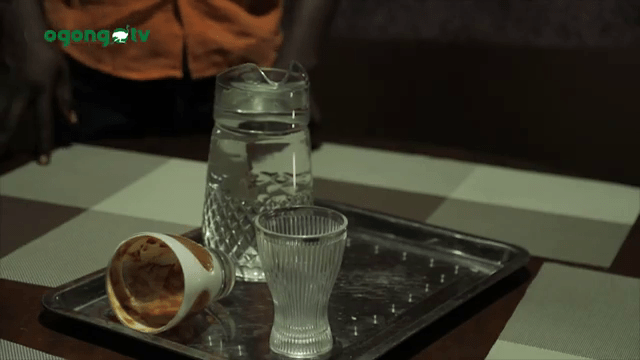
Another commendable aspect of In Love with a Prostitute is the revelation scene, one whose instruction – Wash the cup – Jide misinterprets to mean “Marry her” instead of “Preach the gospel to her; get her saved with the kindness you received from God”. Talk of her salvation should have come before any discussion of marriage. Also remarkable was the acting of the ladies in the brothel.
My own takeaway from In Love with a Prostitute is the actions of the so-called believers in the movie. Jide’s neighbour was so quick to tag his neighbours ‘prostitutes’ when the real question is whether he had tried to shine the light of the gospel of Christ on them. Of course, there is need for caution but are we really reaching out to people like that who need help, or we’re just content to judge and condemn them? Likewise, was Mrs Williams seriously trying to pay Sharon off? That wasn’t Christ-like at all. I pray that the Lord will help us all to be true ambassadors of Jesus Christ.
Alright, we’ve come to the end of this review? Have you seen the movie? What did you think about it? Please let me know your thoughts in the comments section below. You could watch the movie below:
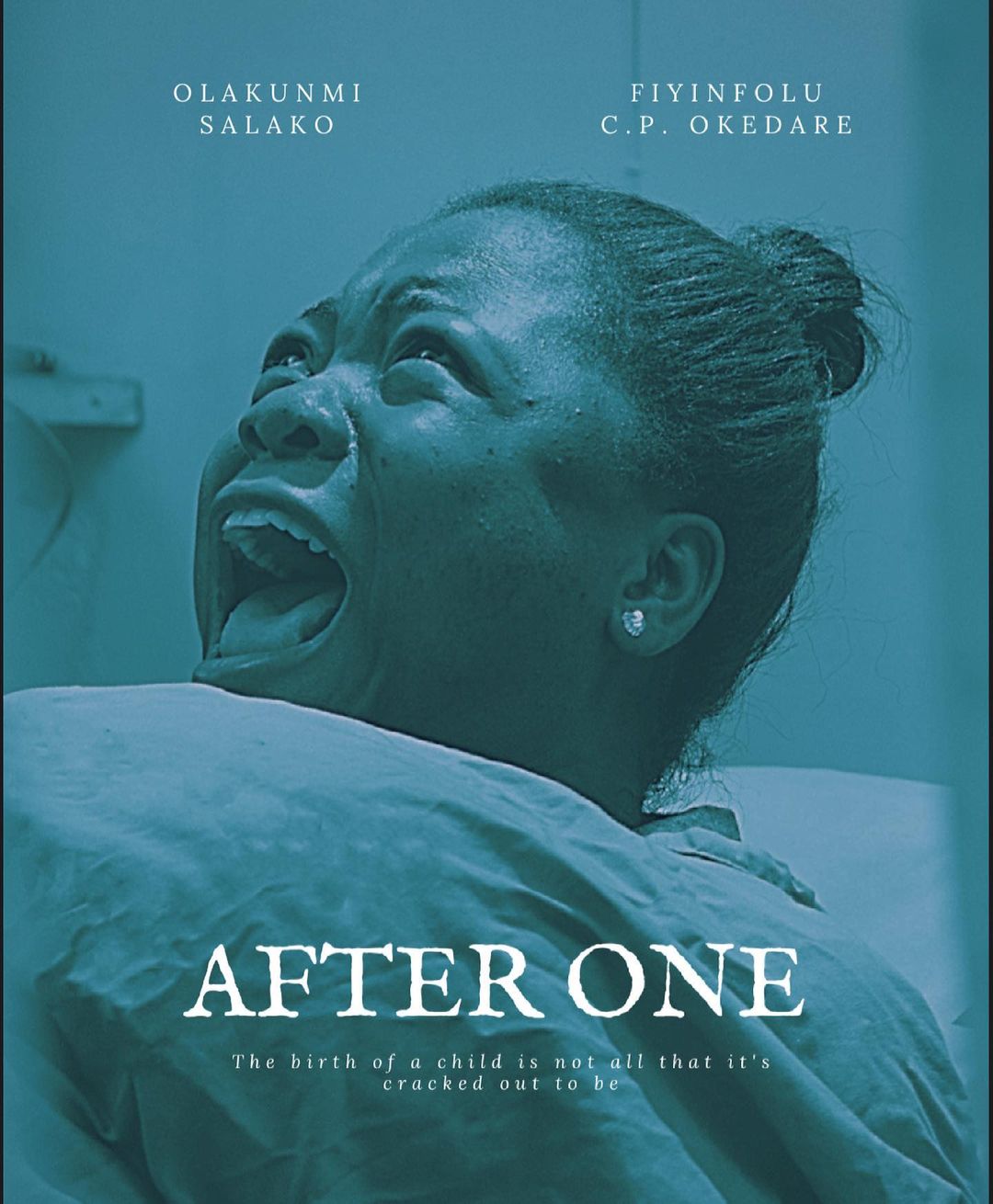
Hey folks! You’re welcome to the review of a Christian short film After One. I came across its trailer some weeks ago and I was captivated by its poster, the theme I perceived it would consider, its tone, and the casting of Jane, played by Olakunmi Salako, who perfectly looked the part of a nursing mother. Having seen her feature in movies like The Boomerang (2018) and Prime Suspect (2020), her selection in After One, for me, suggested excellence and great attention to detail. Right then in my heart, I was inspired to begin reviewing short films on a consistent basis; such was the impact the trailer had on me.
After One was released on YouTube on March 26, 2021, from the partnership between KinsMan Media and Preciouscrown Production. The story was written by Lydia Emmanuel, directed by Ayobola Eniola and produced by Ololade Okedare and Fiyinfolu CP Okedare.
This short film addresses the challenges new mothers face after childbirth, a situation vividly portrayed through earnest cinematography that details every aspect of the matter. Another strength of After One is the excellent performance of the cast. The protagonist, Jane, was played by Olakunmi Salako, who has always seemed to me like a natural; she always conveys her emotions convincingly to the audience. You would care about her Jane character; we feel what she feels, we can relate to it, or at least, we want to imagine what she is going through. Every other person played their roles with ease and propriety: Fiyinfolu CP Okedare as John, Sade Aina as Jane’s mother-in-law; Adedamola Salako and Seun Adejumobi as John’s friends and Jane’s friends all reflected different personalities; they were very good. They all featured in my favourite scene – that naming ceremony scene – that had good background music and nice steadicam movements.
After One may be a short film but it brings to our screens a matter I find it hard to recollect any other Christian movie has tackled. It chronicles the struggles modern age new mothers have with their identity, family customs and social constructs. It’s a corrective movie that urges men to move beyond societal stereotypes and wrong mindsets that limit them from loving their wives as Christ loves the church. After One is also well-structured in terms of its mood and tone, no better signified than by the appropriate background tunes which conveyed the emotions the director wanted in each scene.
Ahead of subsequent productions, I would like the producing ministries to look into achieving consistency in the subtitle format, the subtitling itself, colour grading and camera focus. Also, the dressing of characters should be given more attention and be better coordinated. All in all, After One is a wonderful Christian movie and in practical terms for a new father, God is saying: “Do not regard the feeding of your baby as the mother’s concern alone; chip in. The baby’s welfare is not the mother’s business alone; never leave it to her to do”.
Alright, we’ve come to the end of this review. Have you seen it? What did you think about it? What’s your take home from After One? Please let me know your thoughts in the comments section below.
Hey folks! You’re welcome to the review of a very nice Christian movie in ENIOLA.
Eniola was produced by the partnership between the Mount Zion Film Productions and Watchman Drama Ministry. It was directed by Isaac Femi-Akintunde, whose movies I always like to watch because of their sound plots. I’ve observed that each usually has something unique about them and Eniola is no different.
This movie is what you might call a modern Yoruba Christian film, in the sense that majority of the cast are young people who are tasked with using the Yoruba language as the main medium of dialogue in the film. Given the fact that in reality, most educated youths generally converse in English, or at best, code-mix it with Yoruba, employing Yoruba largely for the dialogue in Eniola gives the film a different, pleasant tone. In an age where English language has become the mother tongue of most children and the very rich, indigenous language of south-western Nigeria is gradually losing its value among those who are natives, this is a welcome development and I’d like to see more gospel movies situated in towns and comprising youths adopt this method. It is a unique style that cuts down on the elaborations and digressions that make dialogues in many Yoruba gospel movies long, and the conversations are easily understandable. This meant that the subtitles needed to be very good and I think Eniola quite achieves that.
I’m of the opinion that this movie does well to get our attention from the start because of its love genre; it was actually YouTube-released on February 14 this year and that gives it this peaceful, rustic atmosphere. Similarly, Eniola features a scene of Christian love poetry; really nice stuff. The mysterious cast led by Tobi Olumuyiwa’s character also gives the audiencea puzzle to resolve. This movie then focuses on an example of the genesis of a Christian courtship, and shows quite clearly how important it is as a precursor to the marriage covenant: there are spiritual battles to be fought and faulty foundations to be addressed. The conflict is quite compelling. I like movies that task you as a viewer; a situation where you either don’t know what the protagonist should do, or you know how difficult it might be for them to do what needs to be done.
Another well-orchestrated device in Eniola is the depiction of the value of godly friends and close associates. That is literally what salvages the situation for our lead characters: Eniola, the titular actor played by Chioma Chukwulotam, and Diran, played by Ayo “Cineman” Olaleye, who delivered remarkable performances. Also, in a minor role, Aanu Kolade was so believable in her Iyanu character. By God’s grace, she’s an A-list actress who always interprets her roles correctly. At the end of the movie, I just wondered how one gets to someone like her Iyanu, a person who claims to be Christian yet unrepentant.
One character made me ask if indeed, the Christian life was boring like she claimed; she felt so because all her life, godly people had been around her and she felt that kept her from being “free”. Even though it was a subplot, I believe the main plot succinctly shows that being surrounded by godly people helps keep us from doing wrong, and it’s a blessing, not a bondage.
The eponymous character, Eniola, is portrayed as someone that is rather too secretive, and when this makes her begin to say one or two untrue things, it made me see that as a child of God, our paths need to be straight. We’re not too far from the devil when we engage in any form of deceit. The stakes are high for Eniola and she has both internal and external conflicts that seem to be constantly over her. The enemy thought the dance of shame would destroy her marital life but God took hold of that embarrassment and used it to exhume the secret that held the key to her deliverance.
Alright, we’ve come to the end of the review of Eniola. Have you seen it? What did you think about it? How does someone get through to someone like Iyanu? Also, do you think it was right for Eniola not to open up to Diran early enough? How would you encourage someone in similar shoes to do the needful? Please let me know your thoughts in the comments section below.
You can watch the movie below :
You can also watch the video of this review below :
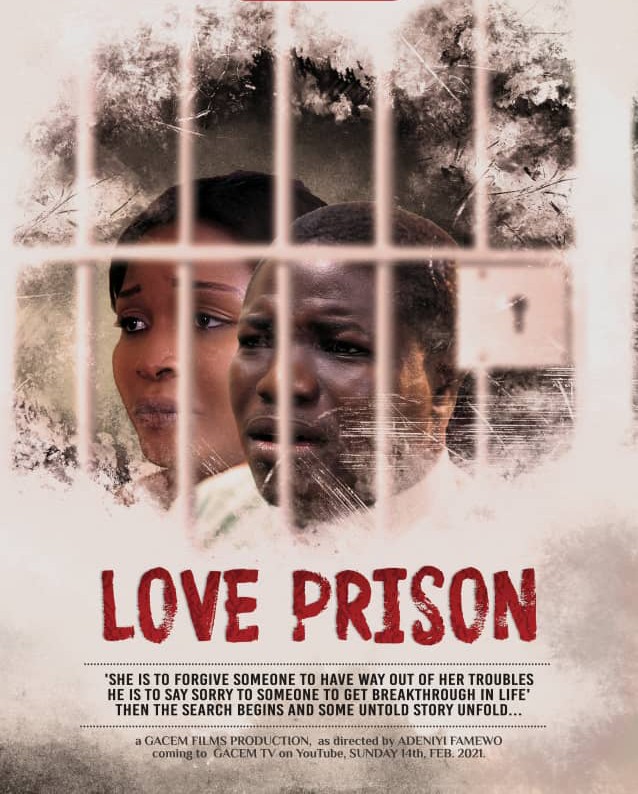
What’s up, folks? You’re welcome to the review of “Love Prison”, a Valentine’s Day Christian YouTube release this year from the stables of GACEM Films and Music Production. The story was conceived and the movie directed by Adeniyi Famewo, while the screenplay was written by Dayo David. I always like it when I see both the story concept and the screenplay being credited in the opening sequence of movies.
“Love Prison” has its lead actors in Seun Adejumobi who featured in The Train (2020) and Unplugged (2020) and Omowunmi Olatunde who featured in Abattoir Season 1(2020) and In Love with a Prostitute (2021), playing a newly-wedded couple, but no sooner had the movie begun than the strife started and the conflict kept increasing as the story progressed. This helped in sustaining the interest of the audience till the end. Also, the main soundtrack was pretty good, while the film possesses quite a high picture quality and features active camera movements with successful long takes. Similarly, though a minor character, Eniola, played by Titilayo Adesanya, nails her role.
The 70-minute movie qualifies as a proper love movie because it portrays romantic love between a Christian couple and at the end of the day, you would realize that love is more than words; it’s about the things we do and our motives behind them. “Love Prison” shows the consequences of insincerity during courtship. While it seems that it’s Omowunmi Olatunde’s Bimpe that is culpable, the depths of the spiritual immaturity and lack of genuine love for wife from Seun Adejumobi’s Kola is of greater concern.
Kola embodies a myriad of wrong mindsets like his wife being a source of bad luck to him. He also feels that prayers would work exclusively of whether he holds his wife in unforgiveness or not. This movie addresses such hypocrisy and portrays the double-mindedness of an unstable Christian who should have made his pastor his first point of call, rather than fraternizing with spiritualists here and there. It also shows us that the fact that we have been hurt should not then make us ungodly or vengeful, which does not portray God’s love in any way.
In the description of the movie on YouTube, it is stated that some untold stories unfold and for me, it was a good plot twist. I however would have loved it if it wasn’t made open-ended, which would have answered questions on how Bimpe’s grandmother handled the case of the “young man” that stayed in her house. Also, there was an unnecessary scene that the movie could have done without in Kola’s confrontation with a cyclist. All in all, “Love Prison” is a touching movie where we care for the characters and learn what true love entails and doesn’t comprise.
Alright, we’ve come to the end of this review. You can watch the movie below:














 Witness Gospel Movie Reviews