Neema is a 133-minute movie that is rich on every
level – the story, its message, the performance of the actors, the reflection
of reality, the captivation of the audience. It is like a delicious meal that fills
you till you get satisfied. It doesn’t stuff itself down your throat but
rather, feeds you spoon by spoon till the film is over, after which the
digestion of its contents takes place step by step. The movie holds you gently
and does not let you go till it’s done showing you the lives of its engaging
characters.
Producers
The award-winning
movie was brilliantly written by Tola Bolaji and directed by Daramola Kayode
Babalola. It boasts a star-studded cast comprising veteran David Kola Okeowo, Afolabi
Dipeolu (Running Against the Wind), Opeyemi Akintunde (Family
Riot), Daramola Kayode Bablola (Back from Babylon, The Table is Set),
Adekunle Idowu (Konkomania, God of Elijah), and a host of others.
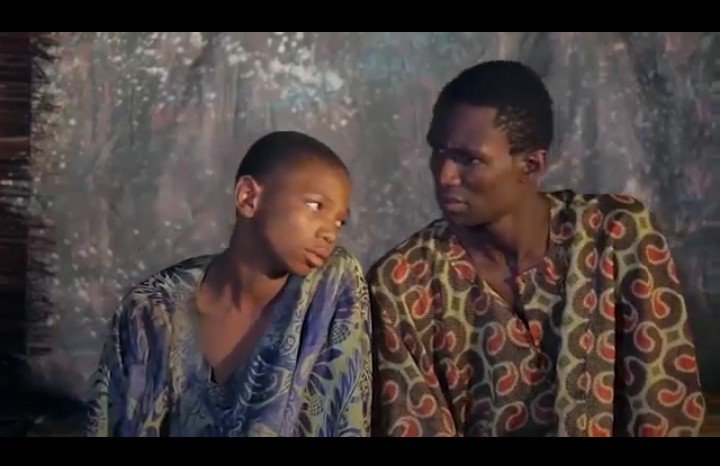
Black and Samson brainstorming
You know,
sometimes, when something is excellent, you fall short of words to describe it;
that’s the way I feel about this movie.
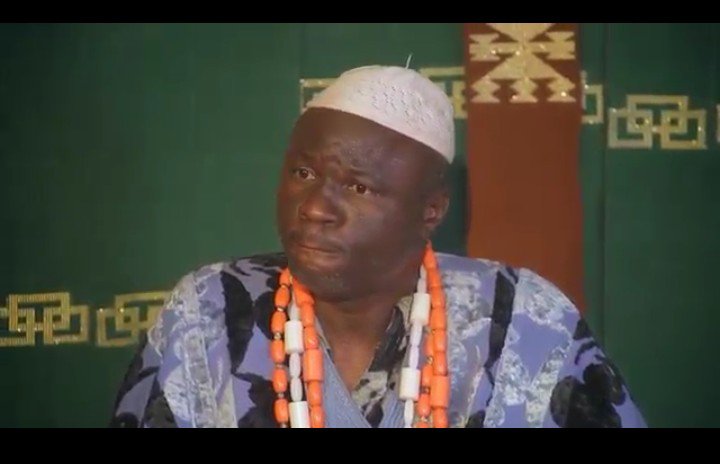
David Kola Okeowo’s character
I was
initially reluctant to watch the movie because of its length. I wondered to myself
whether it was a movie of two parts or a series, or something; I didn’t know
what could justify it being that long. When I heard it had won awards, I decided
to watch it, and seriously, I was not disappointed at all. In fact, the last
movie that had that kind of effect on me was Land of Fury (2018). Neema is a very impactful
and profound movie.
Mrs Bright
Neemais a story that weaves related plots together
with a balance that is remarkable. It steadily builds its main plot and
subplots in such a way that none feels overbearing or undertreated. It is a
story that engages you from start to finish. The characters are well-built and
we can relate to every thought, speech and action taken by them. The movie was
evenly-paced such that it did not feel very long. Even when it had to do a
flashback, it was done in a way that would create another set of images in the
mind of the viewer.
An angry neighbour
It seems
like certain decisions were made on its colour grading as there was a green
feel to the whole movie, kind of in the way Ajoji Emi (2014) had a red feel to it. The music
was apt for each scene and the camera work was accurately executed, even aiding
the telling of the story.
Afolabi Dipeolu and Opeyemi Akintunde
It feels so
strange to be lost for words but the truth is that there is so much to learn
from, and enjoy in this movie. Wait know further; watch the movie by clicking the
link below and put your comments on it in the comments section.
Did you know? Neema was nominated
for several awards at Gofestival 2019 but won the prizes for Best Storyline and
Best Directing.
Konkomania is an award-winning short film from the stables of Christ the Rock Media Communication (CRM). It was written and directed by Seyi Pedro-Adetola.
Title page
From the onset, we see that there’s something special about this movie. The graphics for the opening credits create the feel of a Hollywood blockbuster. There’s a splendid camera movement in the second scene to reveal the main character, Konko, played by Segun Temitayo. His performance is excellent; his portrayal of a “garage boy” is first-class. Pedro-Adetola’s depiction of his mother is truly remarkable. I commented on my review of Kembe Isonu that her performance there was her best I’d ever seen; I didn’t know she’d produced an excellent rendition in a previous movie. I’ll surely be looking out for more movies she’s featured in.
Seyi Pedro-Adetola’s Mama Konko
Some tune choices were creatively done and matched the scenes they were chosen for. It was a short movie but still had time for a few comic lines along the way. The dialogue was well-scripted; it was enlightening at times and the perfect language for the garage setting was used. The movie makes us see that in spite of dire circumstances, there’s hope for everyone who lets God in. It rightly negates the mentality of fate that many have, even Christians, and makes us see that God’s plans for us are for good (Jeremiah 29:11).
Is he ready?
The potential of Konkomania, I feel, is bigger than a
short movie. It has enough material to be feature-length. How do I mean? One
answer – Mama Konko, Seyi Pedro-Adetola’s character.
Is there more to come from this character?
For a few minutes at the beginning, one would think that she’d be the heroine of the movie; that’s until Konko’s character steps up to that plate. A one-hour film can be crafted on her character, and boy, what a character that would be!
I think though, that the opening scene of the movie could have been cut out, because I’m not sure what its relevance to the overall movie is. Perhaps, a sequel? That would be something, wouldn’t it?
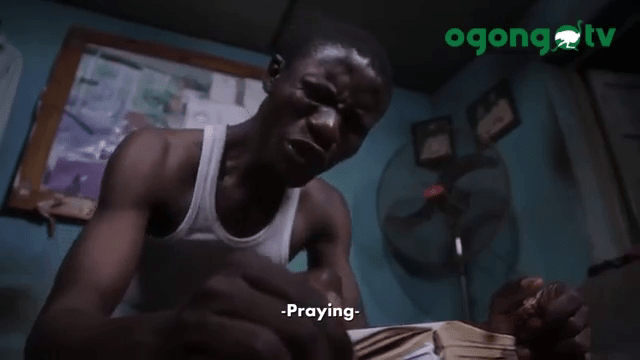
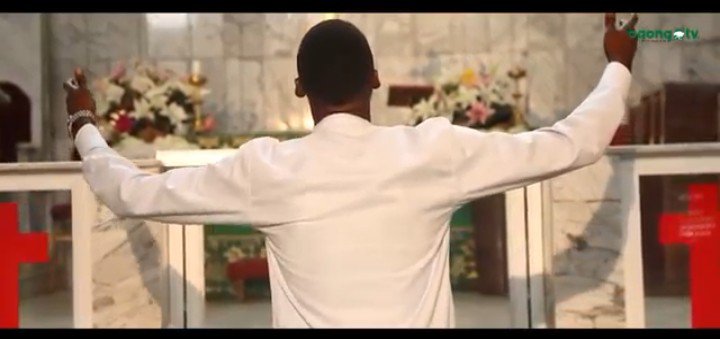
An intercessor
One sentence repeated occasionally in the movie is “Are
you ready?” I feel this is a significant question that faces everyone in
the world. It’s a defining moment in our lives – when we’d decide to accept or
refuse the sacrifice Jesus made for us. It’s a yes/no question that holds so
much capacity for the change we all need. I pray our response will always be in
the positive.
Did you know? Konkomania won the award for Best
Short Film, and took third place for Best Audio at Gofestival 2019.
To watch/download the movie, click on the link below
Next, we’ll be reviewing another award-winning movie, Neema.
Watch out!
I just finished watching Neema a couple of minutes ago, and what an experience it was!
In fact, no movie has moved me so much since Damilola Mike-Bamiloye’s Land of Fury in 2018.
I shouldn’t be too surprised though, because Neema was nominated for several awards at GOFEST 2019 and won a few at the event. Truly, it is an excellent movie.
Okunkun Birimubirimuis a captivating movie about a couple’s journey through having a child out of wedlock. As usual, Isaac Femi-Akintunde has come up with a brilliant story that immerses the spirit, soul and body of the viewer into the pool of its conflict and resolution. It was released from the stables of Mount Zion Film Productions, and was directed by Isaac Femi-Akintunde as well.
After all Bosun had gone through in the courtship…
One major thing to commend about this movie is the near-flawless subtitles. Subtitles have rather unfortunately been an area where it seems Gospel movies have had problems in the recent past, but with the kind of effort put into the subtitling of this movie, the future is really bright for subsequent movies.
The questioner?
The sequence of the plot is really good. Even though most of the events can be said to be a flashback, it is imaginatively done. Because of this, the movie makes for a more interesting narrative on second watching. The premise that drives the plot can be found in the command the Holy Spirit gives men in Ephesians 5:25. This film gives quite an adequate and illustrative reflection of it. Nowhere else do we feel the love more than at the end of the movie. It is a love story at its core but also shows itself up as a Gospel movie.
Shade’s parents
All the actors and actresses here perform their roles very well. Isaac Femi-Akintunde (Abejoye Series, Kembe Isonu) and Bukola Omolola (Block 10, Laide’s Note) play realistic parents for Shade, who was effectively played by Opeyemi Akintunde (Neema, Ewa Inu). Her husband is played by Jide Aanu Ademola (Ewa Inu, Family Riot). Thumbs up should be given to Nike Owah for giving Aanu Ademola a younger look; he looks his most handsome in this film, in my opinion. Also, when the time came around, Opeyemi Akintunde did look like a pregnant woman.
The Pastor
The camera work was nicely done, with pans, zooms and dolly shots spread across every scene in the movie. The editing was also seamlessly executed. The use of dialogue to form transitions into new scenes was a move successfully pulled off. The music was distinct, harmonious and pleasurable.
Something that I observed, and which I think is one of the strengths of Okunkun Birimubirimu, is that it presents down-to-earth, and especially Biblical perspectives on its subject matter. Almost all its characters are Christians, and we notice that certain undesirable conflicts could arise even in a Christian home. While some unpleasant things happen, we see how we as Christians ought to handle such matters. Similarly, we notice that there are different levels of maturity in Christ, and it is this maturity that determines how we respond to situations.
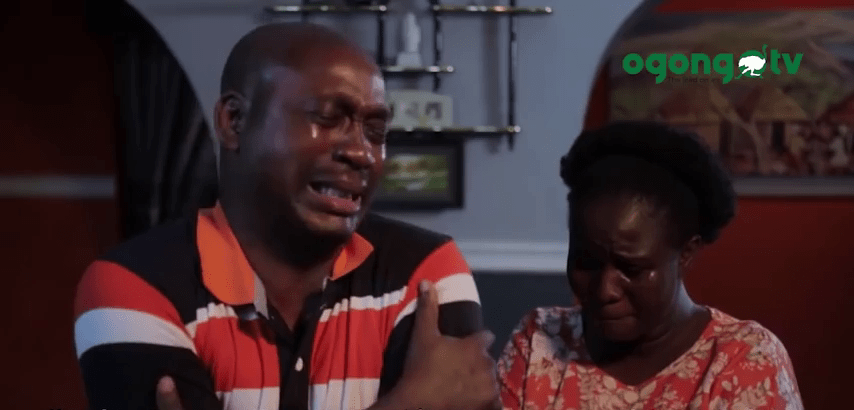
Why the tears?
One other thing I love about the plot of this movie is that right from the get-go, the conflict is introduced. The point that secrecy/deceit never pays off at any time is steadily established. When any of the characters is on the wrong path, God Himself snaps them out of it. All these lead us through to its resolution, which reminds me of Ecclesiastes 7:16-17. Another part of the movie that touches me are the scenes where Jide Aanu Ademola prays over the unborn baby; when you watch it, you’ll discover what makes that place so special.
Bosun prophesies…
Okunkun Birimubirimuis an hour-long movie and is a touching watching experience.
Shade looks older now, doesn’t she?
To watch/download the movie, click the link below.
Dire is a movie from the stables of Mount Zion Film Productions. It was written and directed by David Seun Abraham (Ewa Inu) and starred seeming newbies – Laditi Olaniyi Joseph as Tony and Morolayo Idowu as Sofia as the main characters – with Sam Aliyu, Adeoye Omoniyi (Abejoye Season 2), Ronke Gladys Abraham and a few others as supporting cast.
What’s going on with Tony and Sofia?
Dire tells the story of a young man, Tony, whose marriage proposal to the love of his life, Sofia, has been turned down, and who then begins to second-guess his motives when he learns of her terrible past.
Becky, Sofia’s friend
The story is one that all singles would learn from, as it presents a situation so often encountered, especially in the body of Christ. It raises the question of whether we can truly accept the “all things have become new” pillar of our faith. One thing that I appreciate the movie for is that right from the beginning, we come across less-than-perfect scenarios that present us with opportunity as viewers to ask ourselves what we would do if we were in the characters’ shoes. Such reflexions serve as introspection for us the audience.
Tony’s Mom
The movie has a good story on its hands and tries to let the camera work aid that. Zooms are occasionally used to hone in on the faces of characters to make the scenes more intense, while pans are used to insert motion into some scenes that otherwise might have felt static. Similarly, the cuts to the next scenes are creatively done; this enabled the editing to do a bit of the storytelling. The advantage of this is that each scene was empowered to do only the necessary; no impertinent dialogues or shots, no scene waslonger than it should be. Hence, the movie is evenly-paced, a steadiness it kept from beginning to end.
Tony needs help
The characters were effective without being spectacular. The viewer does feel that Laditi’s Tony and Idowu’s Sofia are actually in the situation the writer throws them into. I’m particularly impressed by the portrayal of the relationship between Tony and his older brother played by Adeoye Omoniyi. It never pretends that all siblings are close, because we see the difference in temperament and stature clearly; we even feel a rather large gap in their ages, and this is confirmed as Sam is scripted as being the first child while Tony is the last. Kudos then should be given to the casting director for picking actors that fitted the profiles of the characters.
A possible alternative for Tony?
Music, they say, is food to the soul. Unfortunately, Dire was devoid of both. There was strangely no background music or soundtrack in the movie at all. If the movie was this good without tunes, I can only imagine how much better it would be with sound. The greater news is that it’s not an irreversible problem. The movie could be re-edited and background music inserted. That would do the movie a world of good.
Brothers’ talk
All in all, Dire is a solid movie that blesses its audience and has some valuable lessons to be learnt.
This is to announce that you can now watch some of our movie reviews on our YouTube channel – YNWAP REVIEWS.
This channel offers in addition to reviews, trailers and download links, and we hope to eventually make the upgrade to uploading movies. So help us God.
Please watch the channel trailer and subscribe to the channel, while also clicking the notification bell that will notify you of our video uploads.
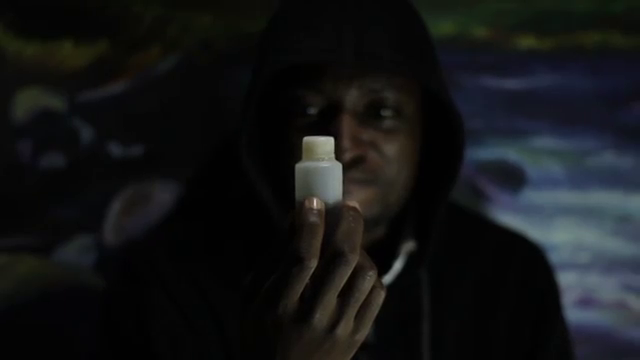
“The Salt” has the feel of a socio-political movie, and is actually one. In fact, I would say that this is an ideal that should be followed. The movie touches different aspects of our society – government, medicine, education, and the economy. Despite its social elements, it is a Christian movie in every sense of the word. It perhaps corrects the notion that a Christian movie is about the church; it’s not. This movie shows that the church is not the totality of the life of the Christian. 90 percent of what Christians do as humans happens outside the church and that is where we show what our real identity is.
The 2019 movie is from the stables of Praise in Zion Ministries Productions and was written by Nike Akande who also headed the music department. The director was Olasunkanmi Solomon.
The way the screenplay was written is commendable because though certain details are excluded from many scenes, subsequent scenes fill up every gap created, to the effect that each scene propels the plot and earns its place in the movie as a whole. Hence, hardly at any point in time did the movie drag or feel arid or boring. In fact, on second viewing, it’s more pleasurable because many of the movie’s elements make more sense to the audience then. The way the main plot and subplots are linked together is artistically done.
The scenery of “The Salt” is rather beautiful, most prominent of which is the tranquil hilltop compound where Chief Agbabiaka, played by Moses Korede Are (Haunted, Kembe Isonu), meets with his goons. Ironically, the matters discussed in that scene are contrary to what Jesus said about a city set on a hill. He produces a top-notch performance as a political godfather, considering the fact that most times, he plays the “good guy”. In that scene, he also delivers a line that would shock the audience – a line that portrays the depth of the ruthlessness of unscrupulous politicians.
The movie uses a variety of music appropriately and uses silence where necessary. The dialogue was also well-scripted; it was expository when it needed to be, and inspirational at the right places. Some nice editing produced a few good simultaneous sequences of action.
“The Salt” quite brilliantly portrays the realities of present-day Nigeria. We see certain ironies when two “thieves” – one behind bars and the other walking free – engage in a conversation about who has wrecked more havoc; corruption has become a competition. The movie also reflects the mentality that many have today, where integrity is seen as weakness. Also impressive is the symbolic use of the number ‘4’ to raise a question – whether the four cups of rice politicians give people to get their support is enough reason to select a leader who would rule for four years, rice that cannot last more than four weeks.
However, there was a discrepancy in the name of a political party: “Righteous” is used in one place while “Upright” is used in another scene regarding that same party. Also, I don’t think it is possible, or at least professional, that a nurse would tell a just-delivered mother that she has lost her babies. Perhaps, this is just to show how some people can be insensitive. Nonetheless, the things “The Salt” has done very well are too many for the words of a review to express.
After being blessed at the end of this movie, I wondered how great it might have been for Nigerians to have watched this movie before the elections held earlier this year; I however saw something significant about it being released on October 1, a historic day in the nation. So, maybe with the knowledge and wisdom garnered from “The Salt”, we can begin to prepare years ahead for the next elections – we are a country known for late planning and shoddy eventual preparations, but perhaps now, we have the opportunity to begin to change our mindsets early enough; we have the chance to begin to pray that the Lord will give us the kind of leaders we need; we have the privilege to rediscover our saltiness in every sphere of life; we have the chance to put things right; we have the chance to be the light of the world, we have the chance to be the change we want to see. It begins now; it begins with us.
So, for the next four years, can we prepare to make decisions that will determine the development of our beloved country? The ball is in our courts.
Not too many short films catch my attention; Not Good Enough did.
The production ministry
The 20-minute long short was written and directed by Land of Fury (2018) star (General), Joseph Opadele, who was ably assisted by his amusing assistant (Mario) in the same movie, Kolo Peter. It was released on the Joseph Opadele YouTube channel from the stables of Salt Drama Ministries, Zaria, Nigeria.
A tense moment
The cinematography of this movie is commendable as the DOP on set – Kolo Peter – purposefully chooses his shots to aid the telling of the story. Rather than rely heavily on dialogue to inform the audience about everything in a scene, this movie lets the shots do the talking where appropriate. Also, though the story is relatively a straightforward and short one, the choice of shots, as well as the editing (done by Joseph Opadele) makes it look like a complex storyline. The DOP also chooses to go handheld sometimes, which helps to create an illusion of the tension in a scene or the instability of a character. Most actors played their parts and delivered their lines believably, which made the movie easier to follow.
99.9 Zoom FM
Another remarkable thing about this short is the score used in the movie. The choice of background music is appropriate and immerses the viewer a bit more into the experience of a pleasurable watching. Even the use of silence and the absence of background music achieve specific effects, and give this short movie a feature film length impression. To cap it off, the theme music of the movie’s title by Johnson Obisesan (Majorjay) provides the perfect, three-minute end credits sequence to the movie. It’s beautifully rendered and is a message on its own, how much more after watching such a heart-touching production. In fact, you might catch yourself humming the song after having watched the movie.
Mr Johnson
The film talks about a man who is being constantly rejected in different aspects of his life, and while he is discouraged, one of his productions helps to save another hopeless person like him, from committing suicide. The hopelessness of the beginning is replaced with a hope that would soothe the heart of every human being, that though we aren’t good enough, God still loves us so much.
It’s a small world…
All
in all, it turns out that Not Good Enough
was actually good enough, maybe even better than that.
The patient dog, they say, eats the fattest bone. Kembe Isonu 2 is a sequel worth waiting for. Thankfully, we didn’t have to wait very long before it was released online on the Damilola Mike-Bamiloye YouTube channel last week.
The slow pace of the first part gave way for a more balanced rhythm which made the events of the movie unfold faster and keep the viewer’s interest in it. This was only made possible because a lot of background work had been done on the first part.
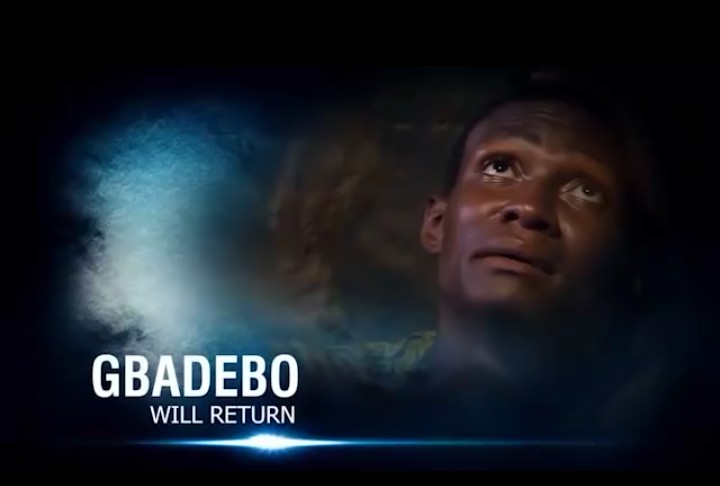
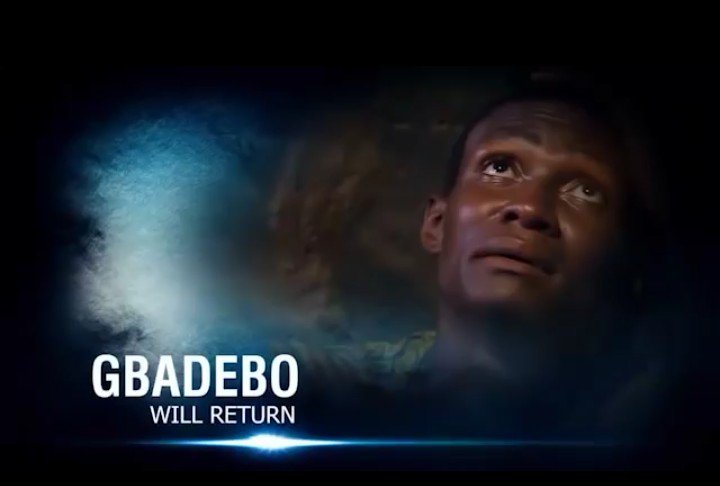
As a whole now, we can say that the movie is about two Christian parents whose children do not follow their way of life, or their faith in God. In Alajogun village where idols are worshipped, this couple is put to death for refusing to give their allegiance to the gods of the land. When their children, Gbadebo (Femi Adebile) and Gbenro (Oladejo Joshua), are about to be made a sacrifice for the “appeasement” of the gods, the young men elope to Bayegun village where they are caught by Ewekoro (Sola Oyin-Adejobi), who sees them as strangers to be sacrificed to the gods of the land. Fortunately for the boys, Ewekoro for one reason or the other cannot seem to give them up to Kembe Isonu (Femi Isaac-Akintunde) who serves as the middleman between the people and the gods of that land, who demand for the blood of a stranger for them to be appeased.
In the will left for them by their parents, several scriptures are found and Ewekoro poses the million-dollar question to Gbadebo and Gbenro – Tani olododo? (Who is the righteous man?). Of course, the boys are unable to answer and that which they had rejected all their lives became their only lifeline – they had to find the answer to that question or they would be handed over to the gods of Bayegun village. Eventually, they get the answer and they become allegiant to the true source of power and the greatest there is in heaven and on earth.
Most characters in the film interpreted their roles perfectly; these are Christians who had to act like they had never heard the name of Jesus before and needless to say, they did just that. Convincingly too. Femi Adebile who you’d think would be the major character, portrayed a young man who wasn’t interested in the gospel at all. He looked like a completely different person; he was almost unnoticeable in the movie, really mirroring the spiritually dead Gbadebo. However, when the Spirit of God filled him, he became more of the Femi Adebile we know. Christ indeed makes the difference. Kudos to the make up team for making him look quite younger than he really is.
Sola Oyin-Adejobi’s and Seyi Pedro-Adetola’s performance as a couple in the movie is worthy of commendation. Their Ewekoro and Abike are my favourite characters as the scenes that had them were the most interesting. They shined whenever they had to deliver their lines and I deem it fit to say here that this is Seyi Pedro-Adetola’s best performance I’ve ever seen in a movie.
There are so many deep lessons that one can take from this movie. We see that when life asks us questions of all sorts, the only ones that will answer successfully are those that know the Lord. Looking deeply, the question (of who the righteous is) is one that perhaps, many Christians today would not be able to answer correctly the first time. It’s worth searching the scriptures for the real answer.
Also, there is a stark difference between the true God and false gods. The overwhelming similarity between the gods of both Alajogun village and Bayegun village is how they demand for human blood to be appeased, and what’s more disheartening is their insatiable thirst for it. Jesus on the other hand, is the Prince of Peace and Life; He does not take people’s lives but rather gives people abundant life. The difference is crystal clear for anyone to see.
The way Kembe Isonu surrenders himself to God is unlike any other movie I’ve seen before. I’m talking here about how the movie portrays his logical reasoning which results in him deciding to serve God. For him, it’s all about serving the one who is most powerful and God does reveal Himself to him. When Kembe Isonu started declaring that Jesus is Lord, his minions shouted: “Abomination”, but he bellowed at them: “There’s no more abomination”. He rationalized that if the gods he served could have warned him not to tamper with the anointed of the Lord, then only Jesus was worth serving.
This shows that Christianity is not about being sentimental or emotional; the logic is also there for the taking. It makes perfect sense that a holy God who could not behold sin but who loves sinners so much, would satisfy the requirement for forgiveness which is the shedding of blood, by sending His Son to pay the price for our sins so that anyone who believes in Him would no longer die but live eternally. It’s so simple yet many times, we miss it. We’ll just need to keep praying that God opens our eyes to really see this truth.
I guess Kembe Isonu would eventually be enlightened about Christianity not being just about serving the most powerful but loving the One who loved us enough to die for us. There are also a few loose ends in terms of the people of Alajogun whom we last saw in the 28th minute of Part 1. It is then of great joy to see that this movie would be taking after a trend that seems to have been started by the Abejoye series (2018-2019) – Kembe Isonu Part One and Two are regarded as KEMBE ISONU SEASON ONE. Also exciting is that, following the trend found in more recent Marvel Cinematic Universe (MCU) movies, the major characters were revealed to be returning in KEMBE ISONU SEASON TWO.
We wait in anticipation of it.
Something however that I feel would have made the movie better is a better background music variety. Using a single tune for chunks of the movie was quite monotonous and that made the movie at times feel drab. Nonetheless, the song at the end credits gave a worthy closure to a pleasurable watching experience.
Subscribe to Damilola Mike Bamiloye’s and Fejosbaba TV’s YouTube channels to watch the movies whenever they’re released for the World Movie Cinema or for the online viewing.
“Kembe Isonu” is a 2019 epic motion picture from the stables of PREM Film Production International (Fejosbaba TV). It was uploaded online momentarily for the World Movie Cinema on Damilola Mike-Bamiloye’s YouTube channel, while it remains perpetually on the Fejosbaba TV YouTube channel. It stars actors such as Moses Korede Are (Haunted, Gbajumo Were), Yemi Akande, Deborah Adeola (Never Again, Gbajumo Were), Femi Adebile (Gbemi, Death in the Pot), Isaac Femi-Akintunde (Abejoye series, Akobi Laaroye), Joshua Oladejo, Shola Oyin-Adejobi (Omo Taani,Akobi Laaroye), Seyi Pedro-Adetola (Ewa Inu, The Stranger) and a host of others.
The title page
Fresh off the back of a critically-acclaimed performance in Mount Zion Film Productions’ latest release Gbemi, Femi Adebile produces a screenplay of his own, with Adeoye Omoniyi (Abejoye Season 2, 1 in 50,000) as the director and well-known Johnson Babatola tripling as the man in charge of Costumes, Props and Set design.
Femi Adebile(right) and his brother played by Oladejo Joshua
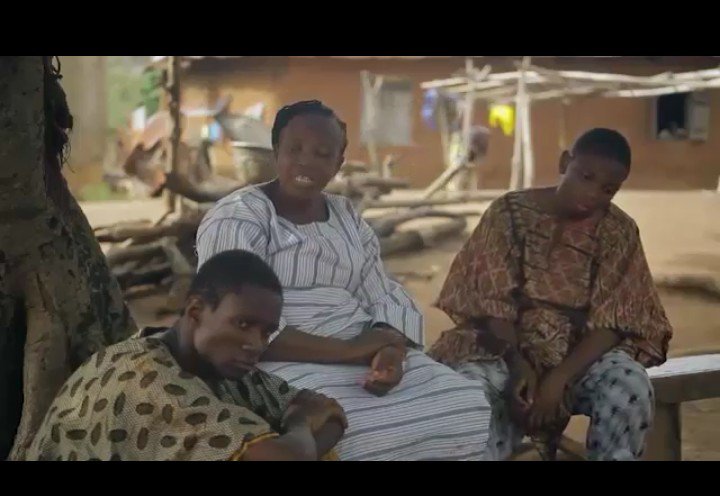
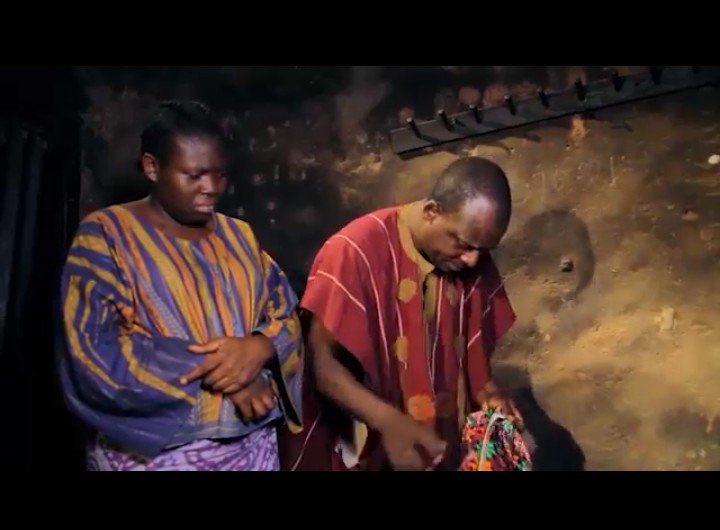
The film tells the story of a couple whose sons refuse to follow their faith in Jesus.
My power is nothing?
What “KEMBE ISONU” requires of its viewers can be put in one word – Patience. It’s important to say this upfront because audiences, especially 21st century Computer/New Media Age viewers, might get moved by the slow pacing and unclear direction of the movie early on. I felt that way and at a point, was just watching passively.
The godly couple
But then, at the 33rd minute of the movie, I saw the potential this movie had and that got me “licking my lips”in anticipation of what “KEMBE ISONU” would turn out to be. I later realized that one of the things that initially made this gospel movie tedious to watch was that I couldn’t figure out where the movie was going, which was rather unusual for me. I didn’t even have the faintest idea, and that upset me. At least, not until half an hour into the movie.
Escaping from Kembe Isonu, uhn?
My hopes were raised and then, seemingly dashed when the potential I had seen disappeared, and the focus of the narrative changed. Quite certain, I’d not quite watched a movie like this before.
The king in a dilemma
However, this is only a first part, and with a few good laughs at different points in the movie, I can only look forward with faith how this film will unfold. One thing is sure, this first part is setting up something big in the Part 2, which as I write, has been released for another World Movie Cinema.
This is one special couple…
I’d previously written in my first draft of this review that “KEMBE ISONU Part 1” was a series with episodes in the body of a feature movie; as if to corroborate my theory, it was released on the producer’s YouTube channel as “KEMBE ISONU Episode 1”. However, I’m also aware that screenplays that take time in building their plots and conflicts often result in masterpieces; I’m trusting that “Kembe Isonu Part 2” will deliver on that premise. It’s by no means over, and it’s incomplete without the second part. Fingers crossed…
























































 Witness Gospel Movie Reviews