“ABALAYE” REVIEW

“Abalaye” is a production like no other in at least two decades, in terms of what I would consider the depth of its nature as a visually arresting epic movie. Released from the stables of Cornerstone Films International, one of the things that got me most about it is the sheer intensity of effort both the cast and crew put into this.

Set in a richly traditional backdrop, this 104-minute film immerses you in a world of vibrant culture, music and intense action. From the colorful picture to the traditional dance, the makeup, costume and expansive sets, everything screams dedication and craft. The movie was a throwback to the epic war dramas of the ’70s (?) through the ’90s, with every frame soaked in cultural texture. I commend the directors and cinematographers for dedicatedly capturing the settings and the editor for some pretty well-executed visual effects.

However, for a film that was made to portray the greatest message in world, it puts forth so much cultural and demonic debris before doing so. With a very simple story line (with little or no depth), “Abalaye” is largely a showmanship of warcraft in ancient times, reminiscent of demonic powers on display which constituted a large part of the visual medium some decades ago. The advent of the drama ministry has since changed the narrative, with the mighty power of God broadcast. To then have a movie like this that dedicates only a fifth of its runtime to the gospel is greatly unbalanced. Even its gospel content unfortunately borders around the heretical, with erroneous extra-Biblical material on Cain’s marriage. The message, that man must be saved, is profound, but arrives rather late and feels unearned. A tighter runtime and a more grounded theological foundation would have served the film better.

On a technical note, the subtitling could have been better, and I use this opportunity to urge editors to avoid overuse of elements, as what I’ve termed the drama ministry’s signature solemn tune – Jay-Mikee’s “Price of Love” – is also heard here. The most shocking aspect of “Abalaye” comes at the very end, when only the cast is credited. Not a single crew member is listed, asides the directors mentioned in the opening credits. For a film that clearly took so much effort behind the scenes, this is a grave oversight.

In summary, “Abalaye” is a gospel movie culturally robust but its storytelling, theological handling and editing choices need to be improved ahead of subsequent productions.

“EMERI” REVIEW

“Emeri” is a thought-provoking film that follows the harrowing journey of a garage boy, Gbolahan (nicknamed Emeri), whose life is shaped by domestic pain and violence, and moral decadence in the society.

The film abounds with many spiritual messages and moral undertones. It underscores how many destinies are derailed by the enemy through dysfunctional families and broken homes. The absence of love and guidance can make fertile ground for destiny manipulation. From time to time, Emeri has a vision that evokes Ecclesiastes 10:7 in my mind, illustrating how people with divine potential often walk the earth as slaves to cycles of poverty, violence and sin. Yet, it also shows that God can intervene, redeeming the worst of stories for His glory. Similarly, as we see in Daniel’s journey, what the enemy meant for evil, God can use for good.

However, though “Emeri” excels thematically, it only manages it technically. The movie’s runtime is unnecessarily prolonged by repetitive elements, most notably a recurring organ-based soundtrack that sings the movie’s title over and over again. While there are a few strong original compositions, the overuse of that one tune breaks the immersion and makes the film feel even longer than it is. In fact, every time it plays, it feels like a scene transition that drags instead of moves the story forward. A more intentional and varied sound design could have done wonders here.

In terms of the cinematography, there’s this slow-motion shot (and scene) that might have elevated the movie’s quality, but it comes off blurry and poorly executed. Likewise, while the film stylishly introduces a host of characters in the opening credits, only one or two of them are truly impactful, making that kind of introduction feel unwarranted.

Furthermore, “Emeri” tries to juggle too many themes, which affects its narrative cohesion. For instance, Officer Bayo, a Christian police officer, is introduced in a promising subplot that ultimately fizzles out. His character had the potential to become the central vessel of Emeri’s transformation, especially given that it was through a divine encounter involving him that Emeri began to seek the ultimate power of God. Instead, that role is given to Daniel, whose own arc is valuable, but feels like a layering that complicates rather than tightens the story.

I can’t help but wonder how much more compelling this production might have been if it had started from Emeri’s roots. His backstory is powerful and emotionally profound, but it comes in later as a flashback, denying the audience the emotional investment that a linear approach might have fostered. The film also veers into heavy sermonizing at times, forgetting that today’s viewers often prefer to connect the dots themselves rather than be led through every message explicitly.

There are also scenes that feel unnecessary or could have been condensed. For example, the outreach at the motor park could have been a brief montage rather than a full scene. The subplots/scenes involving Folasade and Keku further stretch the runtime, and the closing line “This is just the beginning” feels clichéd, especially considering how much has already been packed into this installment. If there truly is more to come, suggestive of a sequel, some of the current material could have been reserved for it instead.

In all, Emeri is a story with heart and spiritual depth, full of lessons about destiny, redemption and the role of Christians in reaching the forgotten. Despite structural and technical decisions that dull its impact, its message remains powerful: no life is beyond God’s reach, and every broken story can find restoration in Him.

Film Credits
EMERI (April 18, 2025)
102 minutes
Christ the Rock Media Communications

Cast
Bayo Yusuff as Emeri
Jide Ogunmilade as Daniel
Seyi Pedro-Adetola aPriscilla
Deborah Adeola aFolasade


Crew
Screenplay
Seyi Pedro-Adetola
Director of Photography
Awoleye Seyifunmi
Editor

Director
Seyi Pedro-Adetola

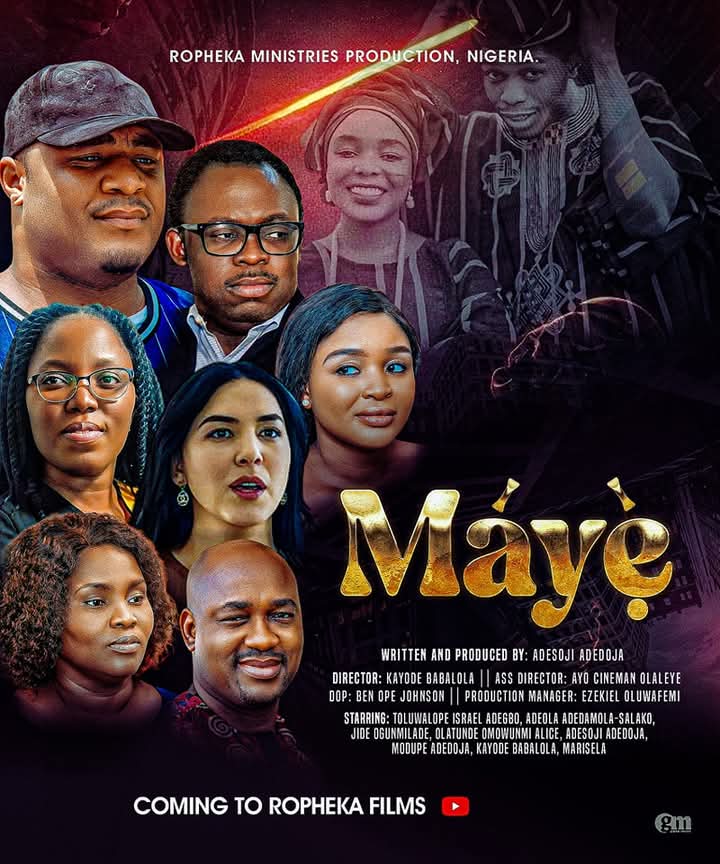
“MAYE” REVIEW

“Maye”, a film from the stables of Ropheka Ministries Production, begins with the story of Luke and Margret, a couple struggling to find common ground in their marriage, particularly as spiritual values pull them in opposite directions.

One of the first things to commend about “Maye” is its release structure. By presenting it in two parts, the filmmakers demonstrated a keen understanding of their medium: YouTube. Instead of making viewers wait another week for the conclusion, both segments were released simultaneously. With a total runtime of over two hours, the split made the film more digestible while preserving its narrative flow. It’s a decision that reflects thoughtfulness and respect for the audience.

The film’s picture quality is solid, and its tone is often lightened by moments of well-executed humour. The acting, too, deserves praise. However, the character of Margret stands out as particularly puzzling. Her actions and expectations often seem contradictory. Knowing full well the background of both Frank and Luke from their college days (marked by moral failure and spiritual darkness), she still chooses to marry Luke and expects him to immediately embody the life of a godly man? Her choices lack the clarity and consistency that would make her journey fully believable. The timeline of her marriage with Luke also feels unclear. At times, they seem like newlyweds, yet their ages and dynamics suggest otherwise. That ambiguity makes it harder to connect fully with their situation.

Furthermore, there are scenes that could have been trimmed or removed to tighten the plot. Margret’s imagined lust for her pastor, for instance, feels unnecessary and doesn’t contribute meaningfully to the story. Likewise, the positioning of the flashback where Luke meets Jane is rather awkward. There’s also a lack of clarity around Luke’s “infidelity.” Margret appears satisfied with his explanation that Jane was merely a distraction; yet a flashback strongly suggests he was more deeply involved with another woman. This unresolved tension makes the narrative feel muddled in places.

The title ‘Maye’ itself isn’t exactly unambiguous. Its connection to the story or central themes isn’t immediately clear. The village scenes featuring an elder speaking about marriage (including the prologue[?]) also feel somewhat disconnected from the rest of the plot.

On a technical level, while the film features original soundtracks that enrich its emotional beats, the repeated use of Jay-Mikee’s “Price of Love” instrumental is overdone. The piece has become something of a default “solemn background tune” in Christian films, and for a production of this scale, something fresher would have been more effective. Oddly, the film also omits a credit for its editor – a small yet significant oversight that should be addressed in future projects.

Despite these areas for improvement, “Maye” grows stronger on a second watch. Some plot twists become more impactful with hindsight, and the interwoven narrative threads gain cohesion. A standout element is the turning point when Luke’s effort to end things with Jane leads to her unexpected reunion with Pastor Williams. That subplot is particularly moving: watching a pastor willingly step back from ministry to restore his home is both humbling and powerful.

The film also highlights the importance of balancing ministry with family, and it reminds us that even spiritual leaders are not immune to heartbreak or struggle. The confrontation of the demonic covenant binding Frank and Luke is intense and underscores a central truth: Jesus truly makes the difference in every life He is present in.

In the end, “Maye” is an ambitious and deeply stirring film. Its message is clear: communication is vital in marriage, and restoration is always possible when Christ is at the centre.

The links to the movie are:
Part 1 – https://youtu.be/J2TQzvwdMaQ?si=cioOgTExEpvU7qqL
Part 2 – https://youtu.be/KeVzTFQ4dto?si=ZiArn2QbPQbJAxxe

Till the next review, stay blessed!

Film Credits
MAYE (April 12, 2025)
137 minutes
Ropheka Ministries Production

Cast
Adesoji Adedoja as Frank
Tolu Adegbo as Luke
Adeola Salako as Margret
Modupe Adedoja as Raina
Jide Ogunmilade as Pastor Williams
Omowunmi Ogunribido as Jane

Crew
Screenplay
Adesoji Adedoja
Directors of Photography
Luke Reither and Ben Ope Johnson
Editor

Director
Kayode Babalola

“HE IS ALL THAT MATTERS 7” REVIEW

“He Is All That Matters” is one movie whose message has stayed with me for a long time. A question I’ve had since its third instalment is regarding its identity: is it a movie with sequels, a series with episodes, or something in between? But now, having seen Part 7, I think it’s clear: it’s a series in the body of a feature film. That understanding helps shape my expectations, and I’m no longer pensive when it turns out the story yet continues.

Part 7 picks up from where the last ended, with the tragic car accident involving Pastor Moses and Pastor George. While Moses survives in a coma, George is pronounced dead. Forgiveness, once again, becomes a central theme as Jane, George’s estranged wife, heartbroken and bitter, initially shuts out Rhoda and her children, only to be gently challenged by Eunice and ultimately convicted by the Spirit of God. Though George’s death was tragic, I’m glad he was able to make restitutions before going to be with the Lord. His final words, shared by Pastor Moses, provide closure to a long, turbulent arc as his two wives begin the peaceful living he desired.

The story then shifts to the Edochies, the family ‘responsible’ for Hezron’s death and the consequent loss of faith by the entire family of the deceased. They further err by refusing George’s burial in their church. Pastor Edochie is nearly swept away again by his wife’s overbearing attitude, but conviction finds him, and in a sobering encounter with the Holy Spirit, he’s reminded that God’s call is not to be shifted, even to a spouse. Like 1 Kings 13 reminds us, when God gives an instruction, we are to hold fast to it regardless of external pressure.

Though we’re told that the Edochies later repented and sought forgiveness, I believe the film missed a significant opportunity here. Instead of merely hearing Susan recount the moment to her in-laws to-be, the Ademuleros, it would have been far more impactful to see that moment unfold. For a woman like Mrs Edochie — stern, manipulative and unrepentant across previous parts — to finally break, weep and seek forgiveness would have provided a cathartic visual moment and a powerful testimony of divine transformation. In cinema, some things are best seen, not just said.

This seventh film ends with the subplot of Towela, and Bande who returns, hoping to reunite with his family. Towela, understandably hesitant, must now face a tough decision. As with many earlier parts, this storyline ends on a cliffhanger, leaving us wondering what path she’ll take. It’s a compelling way to keep the series alive, and it works.

Technically, there’s some commendable cinematography here. Also, the doctor’s performance stands out for its professional polish.

Conclusively, “He Is All That Matters 7” continues the series’ strong emphasis on forgiveness and upholding God’s will as paramount. And as Susan’s story shows, when we trust God beyond the failures of men, He always honours our faith.

The link to the movie is https://youtu.be/Rk39l4odmAg?si=WRb6bekAU6gfEp79

Till the next review, stay blessed!

Film Credits
HE IS ALL THAT MATTERS 7 (April 11, 2025)
51 minutes
EVOM World Network & Ignite Global TV

Cast
Gbenga Ayoola as Moses
Lara Ayoola as Mercy
Yomi Rotimi as Towela
Barbara Akharume as Jane
Gbayike Agboola as Rhoda
Gbenga Okeowo as Pastor Edochie
Bose Amedu as Pastor Mrs Edochie
Yemisi Ayodele as Eunice
‘Shola Mike Agboola as Holy Spirit

Crew
Story
Tsitsi V. Himunyanga Phiri Simpito
Screenplay
‘Shola Mike Agboola
Director of Photography
Sesan Afolayan
Editor
Seyi Fadiji
Music score
‘Tomisin Agboola
Director
‘Shola Mike Agboola

“SHOULD WE KISS?” REVIEW

“Should We Kiss?” is a bold high-school drama rooted in Christian values. From the title alone, it makes no attempt to hide its central theme: kissing, particularly among teenagers navigating adolescence in secondary school.

While this subject is far from new, it’s refreshing to see a feature film approach it through a moral lens. In a media landscape where intimacy is often glamorized, “Should We Kiss?” offers a rare counter-narrative — one that affirms the possibility of making the right choices during this pivotal stage of life.

The film primarily follows Layọ and Jide, two teens drawn to each other, whose budding relationship exposes them to new emotional and spiritual realities. After initial missteps, they regain their footing — only to find themselves facing an even greater battle: resisting assigned seductive forces trying to derail them.

The cast delivers strong performances across the board. However, technically, the film leaves significant room for improvement. Thematically, the message is somewhat overstated; the film’s explicitness in presenting its theme left little room for interpretation or discovery. The film also suffers from a long runtime, which, when paired with slow pacing and repetitive scenes, becomes noticeable. While the background music and establishing shots are solid, they’re reused often and would benefit from more creative editing.

Speaking of editing, there are several abrupt cuts and fleeting shots that add little to the overall visual experience and could have been trimmed. With better pacing and cleaner editing, the impact of this story would be even greater.

Still, “Should We Kiss?” is a commendable effort — one that’s both spiritually rich and grounded in biological research. It’s the kind of film parents should encourage their teenagers to watch, not just for entertainment, but for the deep and necessary conversations it sparks.

You can watch it on https://youtu.be/v4-b2mE4-Hc?si=Pg0YU5roDsjtODaK

Till the next review, stay blessed!

Film Credits

SHOULD WE KISS?
(April 4, 2025)
157 minutes
Deep Thoughts Films

Cast
Ibukunoluwa Akintunde as Layo
Michael Ayemoba as Jide
EwaOluwa Oluwaseyi as Amaka
Opeyemi Akintunde as Miss Helen
Adebayo Thompson as Zino

Crew
Director
Opeyemi Akintunde
Screenwriter
Opeyemi Akintunde and Bisola Akintomide
Cinematographer
Israel Adesoye
Editor
Ogunjobi Oluwaseun

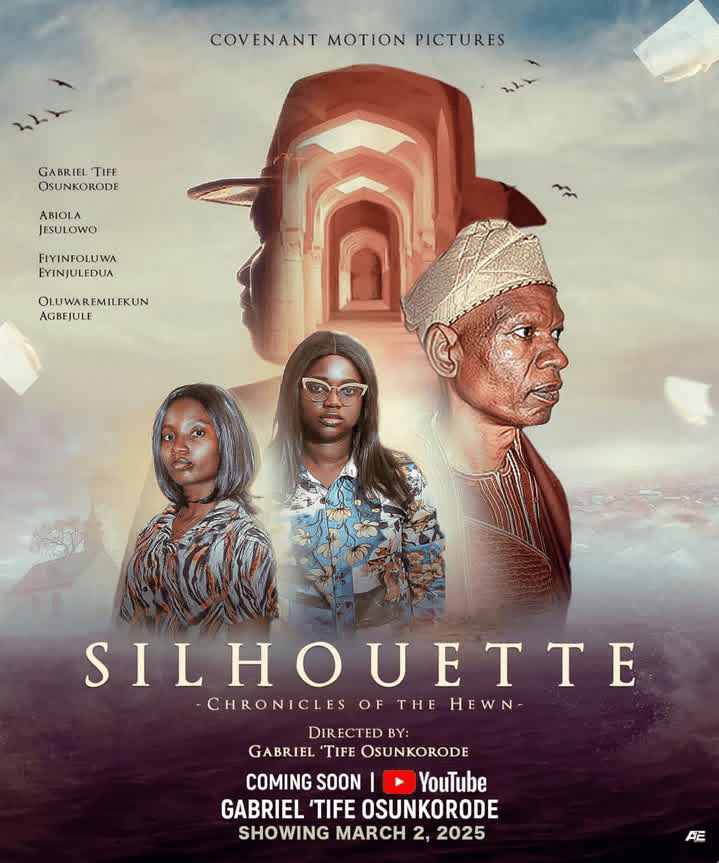
“SILHOUETTE OF DARKNESS” REVIEW

Silhouette of Darkness tells the story of Apostle Nelson, a servant of God who begins to run his ministry on his own terms rather than following the Master’s manual. The film creatively oscillates between past and present, tracing Nelson’s journey from a humble minister to “Most Honourable Apostle Felix Nelson (JP),” as his PA puts it. This movement through time is sometimes brilliantly executed through seamless cuts between gestures in different scenes. The cinematography is solid, though the acting could have been more convincing.

I believe Silhouette of Darkness would have benefitted from a more linear plot. Nelson’s pride is clearly established early on, yet the pivotal moment—when he begins to see God’s promises through a distorted lens—occurs before we witness his humble beginnings. As a result, the film feels somewhat anti-climactic, with a drawn-out runtime and a rushed entry to Nelson’s downfall.

That said, the film serves as a powerful warning to ministers of God against pride. It effectively demonstrates that God is always willing to restore those who return to Him in humility and brokenness. Moreover, it reinforces the importance of building our relationship with God on personal conviction and trust, rather than dependence on any spiritual leader.

The link to the movie https://youtu.be/j05yeQWxTME?si=SsOFRlZShYYWXd9O

Gospel Filmmaking Network Begins Inaugural Annual Conference

The Gospel Filmmaking Network (GFN) has launched its inaugural annual conference, which takes place from November 8 to 9, 2024, according to Gospel Film News.

During a press briefing on Thursday at Redemption City, Ogun State, the association’s Director General, Evangelist Kayode Babalola, highlighted the vision behind GFN. Established under the leadership of its Chairman, Evangelist Mike Bamiloye, and supported by a dedicated Board of Trustees, GFN aims to foster excellence within the gospel film industry. “Our leadership, with its wisdom and unwavering faith, has paved the way for this guild, which we believe is both timely and divinely inspired,” Babalola stated.

GFN is a unique network dedicated to the often-overlooked technical crew members working behind the scenes in Christian films. “For too long, recognition has been given to those in front of the camera. However, those diligently working in roles like directing, set design, makeup, sound engineering, and costume design often go unnoticed. At GFN, we aim to change that narrative,” he affirmed.

Babalola emphasized that GFN’s mission is to uplift gospel film production standards, promoting excellence in the portrayal of the gospel. “Our mandate is to present Christ’s message with excellence, creativity, and professionalism. Our films should not only communicate the heart of the gospel but also meet and surpass industry standards in technical quality, storytelling, and artistic merit. Excellence honors God, and that is our standard.”


He added that the network is committed to equipping every crew member involved in gospel filmmaking. Through training sessions, workshops, and masterclasses, GFN fosters skill development and encourages a spirit of unity among members. “We are more than a guild; we are a family of believers, using our gifts and talents to serve God’s kingdom, standing shoulder-to-shoulder to tell stories that bring hope, healing, salvation, and transformation,” he remarked.

Representing the GFN Board of Trustees Chairman, Evangelist Mike Bamiloye, Vice Chairman Rev. David Kola Okeowo reiterated GFN’s goal of uniting gospel film production crew members and elevating their contributions on a global stage. According to Bamiloye, GFN was first conceived in 2004 at Premiere Hotel, Ibadan. However, it was officially inaugurated on June 7, 2024, at the Drama Ministers Power Night in Ibadan, marking the realization of a vision 20 years in the making.

GFN covers a range of film crew professionals, including:

Producers

Directors of Photography and Assistant D.O.P.s

Movie Directors

Continuity Managers

Makeup Artists

Set/Props Designers and Managers

Costume Designers and Managers

Sound Managers

Lighting Managers

Screenplay Writers

Music Composers

Movie Editors


The primary objectives of GFN include:

1. Serving as a professional body for evangelical filmmakers.


2. Providing a platform for professional development, collaboration, and representation in the filmmaking industry.


3. Offering technical training, seminars, and workshops.


4. Creating ministry opportunities within Nigeria and internationally.


5. Maintaining high standards and discipline in gospel film production.


6. Connecting with international faith-based production organizations.


7. Fostering collaboration with other gospel filmmakers globally.


8. Raising God-fearing, heavenly-minded filmmakers in other countries.


Bamiloye revealed that GFN has established an international presence, including the launch of GFN-UK, which held its first conference in London earlier in November. GFN-UK is set for official inauguration in early 2025, as GFN invites gospel filmmaking professionals worldwide to join this mission.

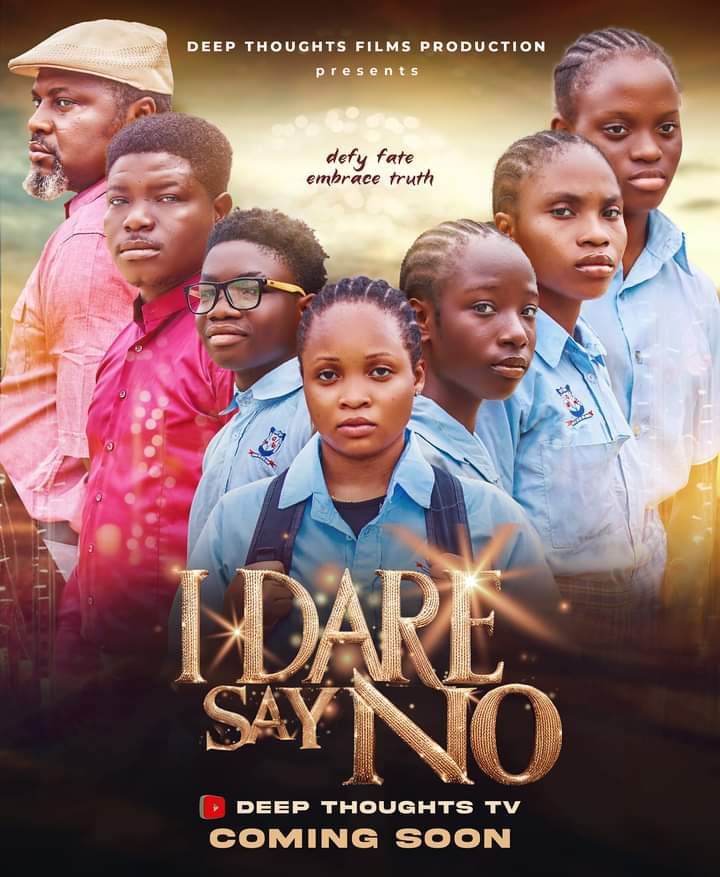
Review of “I Dare Say No”: An Important Story with Room for Growth

Opeyemi Akintunde proves yet again why she’s a standout voice in storytelling. Her ability to weave both prose and drama with finesse is evident in her new film, “I Dare Say No”, a narrative that brings pressing societal issues into focus. The film follows three high school students —Bolanle, Sharon, and Jecinta — as they navigate family traumas and severe personal challenges. With its powerful message, “I Dare Say No” succeeds as a story with real-life application potential for exploring viable paths out of these hardships.

Standout Performances

The cast delivers several memorable performances, contributing to the film’s emotional impact. Joy Akintunde’s portrayal of Bolanle is deeply engaging; she embodies the role so completely that her performance feels entirely natural. I’ve seen Toyin Festus-Hunvenu in a few bit-part roles over the years, but she was able to make this Ninolowo character her own. The director herself, Opeyemi Akintunde, appears as a character, adding a layer of authenticity that blurs the lines between fiction and reality. These performances elevate the film, making its message all the more resonant.

Cinematography and Technical Elements

Visually, “I Dare Say No” has moments of striking cinematography. Certain shots — such as a well-executed 360-degree movement — show creative potential. However, the overall cinematography could benefit from more diversity and creativity. Multiple establishment shots are used between scenes, which interrupts the narrative flow and could have been varied for smoother transitions. Additionally, some cuts contain split-second frames that feel unnecessary, detracting from the pacing and polish. While these are minor technical details, refining them could enhance the viewer’s immersion.

Storytelling and Pacing

The film’s message is reinforced through each protagonist’s journey, particularly Bolanle’s character arc, which is both compelling and relatable. However, the pacing in some scenes feels “hit-and-run,” moving quickly from one action to the next. A bit more time spent on certain scenes would give the audience a chance to connect more deeply with the characters’ struggles and triumphs. Despite this, the film succeeds in portraying its characters’ growth as they find ways to address their challenges holistically — through spiritual, physical, and psychological means.

An Important Message for Society

Ultimately, “I Dare Say No” serves as both an engaging film and a thoughtful guide on handling issues like child defilement and family trauma. The director does an admirable job of presenting a call to action, reminding audiences of the responsibility filmmakers have in shaping societal values, particularly for Nigerian youth. Whether faith-based or secular, they need to take responsibility for the morals of Nigerian children, pushing forward godly lifestyles and not, for the sake of art, validating ungodly living.

Conclusion

While “I Dare Say No” has areas for improvement — specifically in cinematographic variety, pacing, music scoring in the earlier parts, and subtitling — it succeeds in its mission. The performances are convincing, the characters well-developed, and the message crucial for society. This is a film that has something valuable to say, and it says it in a way that could echo for years to come.

The link to the movie is https://www.youtube.com/watch?v=qUDHqsuh-cA

Till the next review, stay blessed!

Film Credits

“I DARE SAY NO”

(October 28, 2024)

119 minutes

Deep Thoughts Films Production

Cast

Joy Akintunde as Bolanle

Oluwatooni Adesina as Sharon

Rejoice Eze as Jecinta

Pius Chioma Obi as Principal

Seun Adejumobi as Pastor Bruce

Edet Elijah as Festus

Toyin Festus-Hunvenu as Mrs Ninolowo

Opeyemi Akintunde as Herself

Crew

Director

Opeyemi Akintunde

Screenwriters

Opeyemi Akintunde, Tola Bolaji, Lekan Ojo and Olaoye Mofoluwaso

Cinematographer

Adesoye Israel

Editor

Ogunjobi Oluwaseun

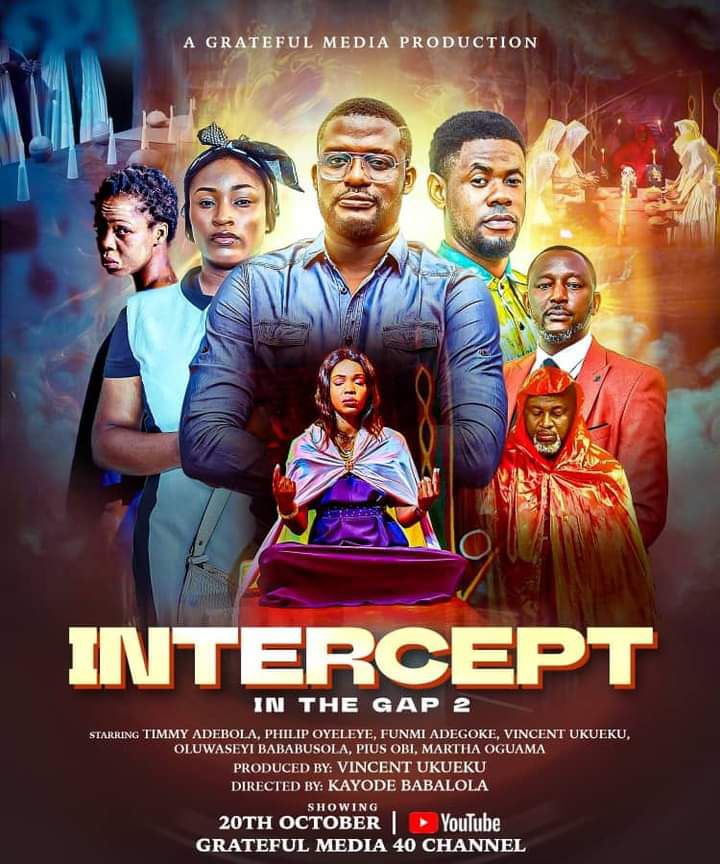
“INTERCEPT” REVIEW

I would like to begin this review with a quick critique I did for its first instalment, “In The Gap” (2023):

For the love of Christ and movies, ‘In The Gap’ is a proof that audiences will follow a good story to the ends of the earth.
In less than a minute into the movie, I was certain the filmmakers knew their onions. This snap review can’t do ‘In The Gap’ justice; it does excel by not falling into that error of sacrificing ‘story’ on the altar of ‘sermon’.
If more Nigerian Christian films adopt this approach going forward, our productions will become motion pictures that would get the world’s attention.
Witness Reviews (October 3, 2023)

Needless to say then that I earnestly anticipated this sequel and after seeing it, my testimony hasn’t changed. The first couple of scenes in “Intercept” are mighty impressive: it adopts a nuanced approach to recapping its past events, and includes new ones seamlessly. The sequence comprising Joshua’s narration, accompanied by stunning visuals and an immersive background tune, was surreal. It creatively depicted the spiritual realm using modern technological interpretations – a powerful presentation that would stay with me for a long time.

I love this “In The Gap” franchise so much because it feels like the most organic title I’ve ever come across. There’s no way you’d talk about the film and not mention that phrase. Despite that, this sequel adopts a different take on the title – Intercept – which still refers to what intercessors do to the schemes of the kingdom of darkness. “Intercept” is a sequel in the real sense of the word, in a time when numeric additions to titles have meant many different things.

Commendably, the movie begins with a tribute to Late Oluwaseyi Bababusola, who played Chioma in the original movie and is reborn here as Scarlet. She is given more material in “Intercept” and delivers with panache. Her rebirth is summarized ingeniously in a montage that took me in. Everything about it is an epitome of the movie’s production value – movements captured by high-end cinematography, and edited to an apt, catchy song. It would have been nice though if it had come earlier and put side-by-side Joshua’s resurrection to create some parallelism in the story.

I would be forgiven for thinking that ace cinematographer Kunle Adepoju who shot “In the Gap” handled this second part as well; I was wrong. Both the shooting and editing were helmed by Iyanuoluwa Adebayo; they were jobs creatively and excellently executed. The background music done by Israel Ore-Bamidele was quite remarkable as well; however, I hope the songs will be properly credited in subsequent productions. All actors delivered performances to effectively portray the core of the movie – the importance of intercession.

Everything about this film speaks its message, and I’m not talking about mere words. The story, the (sub)plots, scenarios…everything! The situation of Joshua and Sandra, Toba and Adaeze, the intercessory group in the school, and the news reports of happenings in the nation all highlight the need for watchmen. Truly, a whole lot goes on in “Intercept” and that slows its momentum a bit from the half-hour mark. Furthermore, this direction would normally feel overstated, but it doesn’t because it is so well written. We see the message and not only hear it.

Most importantly though, we need to live it. The prospect for the intercessory ministry is enormous, in terms of what it can do for us and our nation according to God’s will. I’m particular about what God will do in Nigeria, for I have been told of a prophecy given by Pa Elton in 1986: “Nigerian and Nigerians will be known for corruption worldwide but the tide will turn and Nigeria will also be known for righteousness worldwide. Many shall take hold of him that is a Nigerian, saying, we will go with you, for we have heard that God is with you.”

I believe that people are needed to stand in the gap for Nigeria, people that according to Isaiah 62: 6 – 7, “call on the Lord” and are urged to “give yourselves no rest, and give Him no rest till He establishes Jerusalem (Nigeria) and makes her the praise of the earth”. Hence the question: “Will you stand in the gap so that God’s will shall be done?”

The link to the movie is https://youtu.be/Ie4kuK_hJ6g?si=XiQnIRBikLGdsQVN

Till the next review, stay blessed!

Film Credits


INTERCEPT
(October 20, 2024)
124 minutes
GRATEFUL MEDIA

Cast
Philip Oyeleye as Joshua
Timmy Adebola as Toba
Oluwaseyi Bababusola as Scarlet
Ogooluwa Deborah as Adaeze
Sam Aliu as Mr Edward (Intercessory leader)
Martha Oguama as Sandra
Vincent Ukueku as Pastor Bolaji
Funmilayo Adegoke as Mrs Adeleke


Crew
Director
Kayode Babalola
Screenwriter
Soma Obainom
Cinematographer
Iyanuoluwa Adebayo
Editor
Iyanuoluwa Adebayo
Sound designer
Israel Ore-Bamidele

“BEHIND THE SCENE” REVIEW

As found in the end note of “Behind the Scene”, Isaiah 45:15 – 17 (MSG) describes God as the one “who works behind the scenes”. It is an assertion that helps our faith and trust in the Lord, a thought that every true believer needs to have as they navigate the oceans of life. This is the movie’s core message (though the title should most likely and actually be “Behind the Scenes”).

            This production is a direction of Adeniyi Famewo, and a forte of his is cinematography, which is evident in this movie through the moving shots, as well as the varied establishments shots – especially in a time when aerial views have been overused and have dulled creativity. Having fans on during shooting usually poses problems for sound recording, but the crew for “Behind the Scene” were able to pull it off successfully. The film tells the story of Clara who is faced with the challenge of childlessness and has to find her way through the mental, emotional and moral struggles that may accompany it.

“Behind the Scene” has some nice scores, although they are sadly not credited. In a similar vein though, there is room for finesse in the music, especially when it’s also trying to preach the title or message beneath actual dialogue.

The acting was quite credible too, as Abayomi Ojo and Ife Oyedunmade had an onscreen synergy as a couple. I find the scene where they both were playing a TV game heartwarming, as it highlighted Clara’s love and sense of possession of Segun.

There are a few grey areas in “Behind the Scene” though, particularly with the ordering and length of its scenes. The whole sequence about her journey to Abuja for a conference, meeting up with an old flame, giving in to lust and Segun having a child outside wedlock has got me wondering whether they were dreams, imaginations or reality. Furthermore, many of the short scenes such as Clara’s anger at Segun after seemingly having been comforted by him are mostly inconsequential, and therefore unnecessary. Each scene must be playing a particular role in plot advancement, character development or setting up stakes.

At the end of the day, God comes through for Clara in a most unusual way. However, the appearance of Mr Rufus, and his solution-bringing story-within-story, in the third act and not before, seemed a bit off to me. After all the buildup in Act 1 and 2, to start reinvesting in Joyce’s life felt somewhat abrupt. Nonetheless, I must confess that seeing her worship God after all she’d been through was deeply moving. Cohesiveness in story plotting should be given priority so that gospel movies come out in the best way possible.

The link to the movie is https://www.youtube.com/watch?v=PNopnnPgTC0

Till the next review, stay blessed!

Film Credits

BEHIND THE SCENE

(September 15, 2024)

75 minutes

WATEM

Cast

Ife Oyedunmade as Clara

Abayomi Ojo as Segun

Idowu Oluwaferanmi as Mama

Eunice Adepoju as Tomi

Samuel Olupelumi as Rufus

Crew

Director

Adeniyi Famewo

Writer

Samuel Olupelumi

Screenwriter

Adeniyi Famewo

Cinematographers

Opeyemi Ayinla and Olatunde Raheem

Editors

Opeyemi Ayinla and Idowu Ayinde

Design a site like this with WordPress.com
Get started